Comunicato Stampa
Un sistema solare in formazione? Due pianeti in formazione individuati nel disco che circonda una giovane stella
24 Marzo 2026
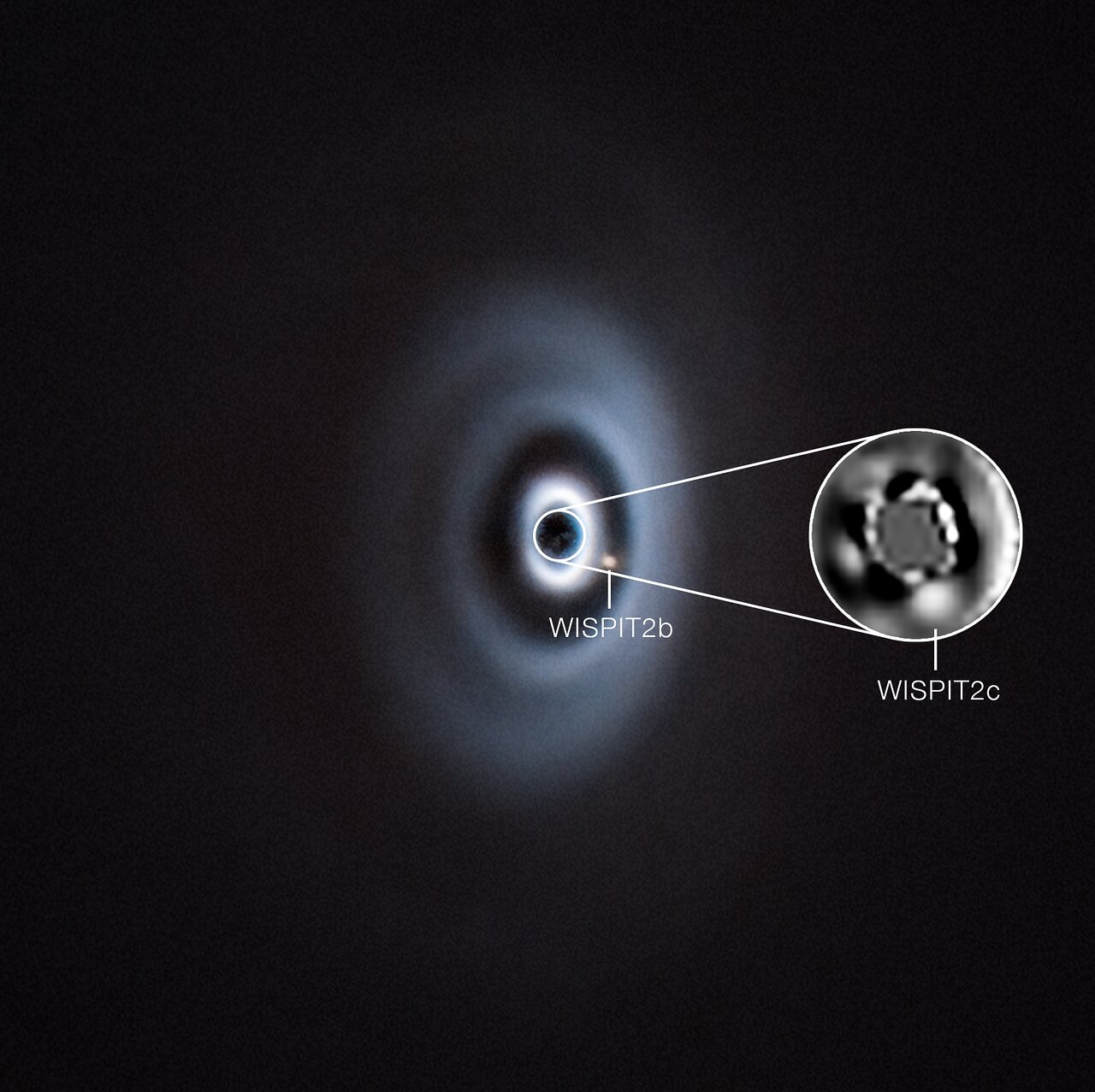
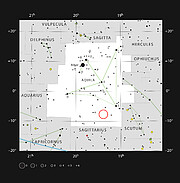
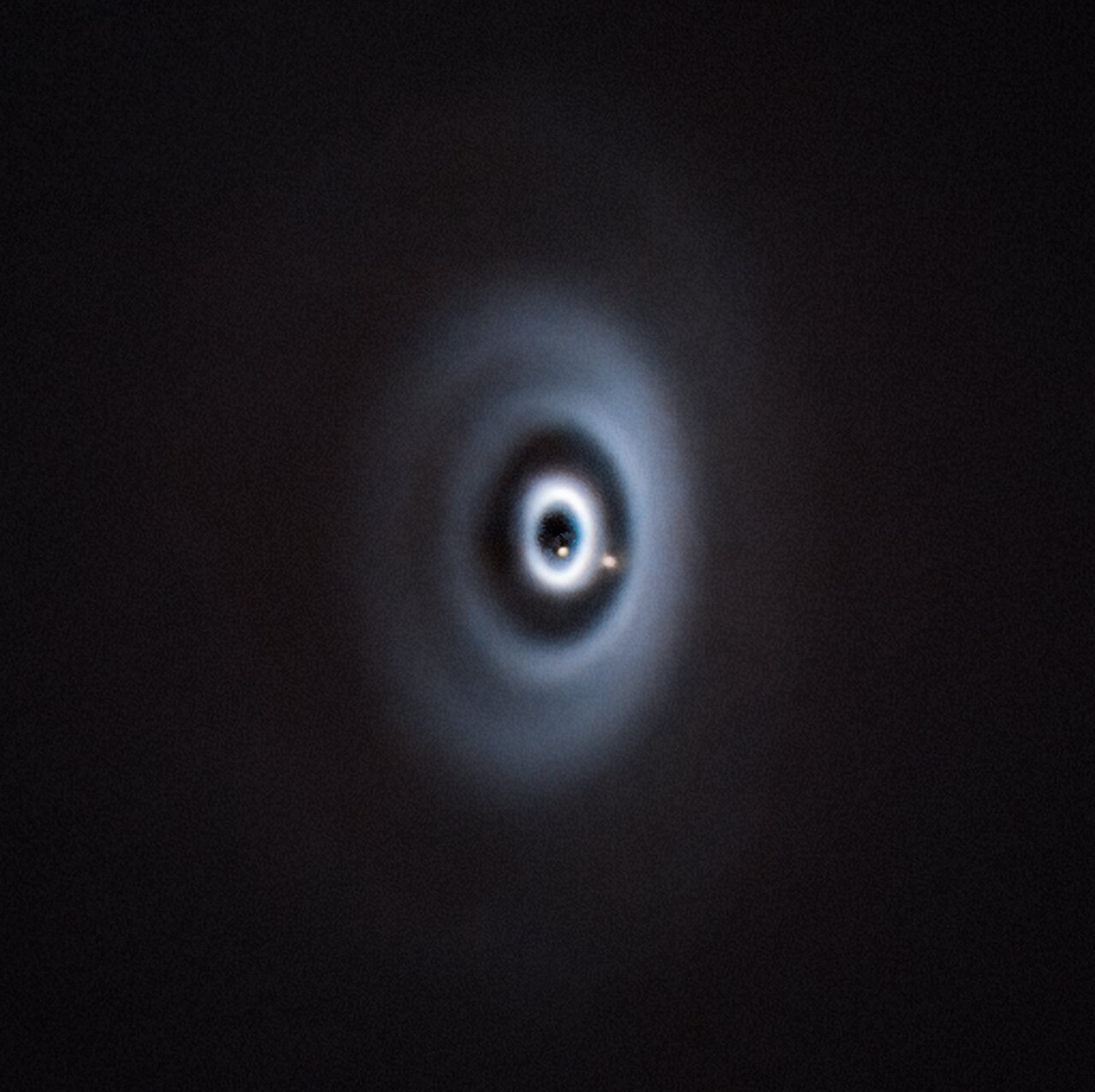
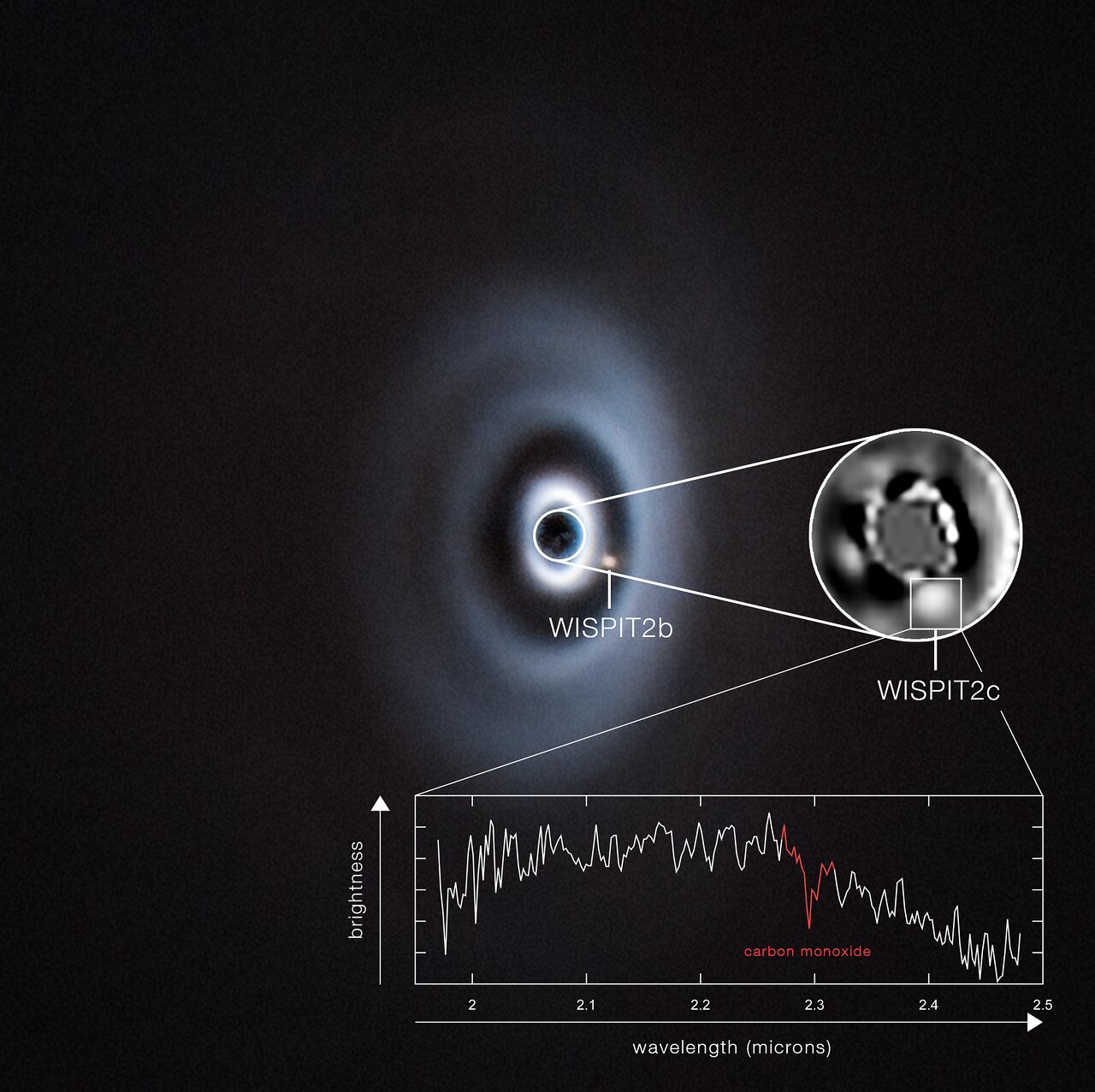
Alcuni astronomi hanno osservato la formazione di due pianeti nel disco che circonda una giovane stella chiamata WISPIT 2. Dopo averne individuato uno, il gruppo ha ora utilizzato i telescopi dell'Osservatorio Europeo Australe (ESO) per confermare la presenza di un secondo pianeta. Queste osservazioni, e la struttura unica del disco intorno alla stella, indicano che il sistema WISPIT 2 potrebbe assomigliare a un giovane Sistema Solare.
"WISPIT 2 è la migliore veduta sul nostro passato che abbiamo avuto finora", afferma Chloe Lawlor, dottoranda all'Università di Galway, in Irlanda, e autrice principale dello studio pubblicato oggi su The Astrophysical Journal Letters. Questo sistema è solo il secondo che conosciamo, dopo PDS 70, in cui sono stati osservati direttamente due pianeti in fase di formazione intorno alla propria stella ospite. A differenza di PDS 70, tuttavia, WISPIT 2 ha un disco di formazione planetaria molto esteso con lacune e anelli distintivi. "Queste strutture suggeriscono che altri pianeti si stanno formando e che alla fine riusciremo a individuarli", afferma Lawlor. "WISPIT 2 ci offre un laboratorio fondamentale non solo per osservare la formazione di un singolo pianeta, ma di un intero sistema planetario", aggiunge Christian Ginski, coautore dello studio e ricercatore presso l'Università di Galway. Grazie a tali osservazioni, gli astronomi mirano a comprendere meglio come i sistemi planetari in fase iniziale si sviluppino in sistemi maturi, come il nostro.
Il primo pianeta neonato scoperto nel sistema, denominato WISPIT 2b, è stato scoperto lo scorso anno, con una massa quasi cinque volte superiore a quella di Giove e in orbita intorno alla stella centrale a una distanza pari a circa 60 volte quella tra la Terra e il Sole. "Questa scoperta di un nuovo mondo in formazione ha dimostrato l'incredibile potenziale della strumentazione attuale", ha affermato Richelle van Capelleveen, dottoranda presso l'Osservatorio di Leiden, nei Paesi Bassi, e a capo dello studio precedente. Dopo l'identificazione di un ulteriore oggetto vicino alla stella [1], le misure effettuate con il Very Large Telescope (VLT) e l'interferometro del VLT (VLTI) dell'ESO ne hanno confermato la natura planetaria. Il nuovo pianeta, WISPIT 2c, è quattro volte più vicino alla stella centrale e ha una massa doppia rispetto a WISPIT 2b. Entrambi i pianeti sono giganti gassosi, come i pianeti esterni del Sistema Solare.
Per confermare l'esistenza di WISPIT 2c, il gruppo ha utilizzato lo strumento SPHERE installato sul VLT dell'ESO, che ha catturato un'immagine dell'oggetto. Il gruppo ha quindi utilizzato lo strumento GRAVITY+ sul VLTI per confermare che l'oggetto fosse effettivamente un pianeta. "Un aspetto critico per il nostro studio è stato l'utilizzo dello strumento GRAVITY+ recentemente aggiornato, senza il quale non saremmo stati in grado di ottenere una misura così netta del pianeta così vicino alla stella", afferma Guillaume Bourdarot, coautore dello studio e ricercatore presso il Max Planck Institute for Extraterrestrial Physics di Garching, in Germania.
Entrambi i pianeti di WISPIT 2 sono visibili in lacune ben definite all'interno del disco di polvere e gas che orbita intorno alla giovane stella. Queste lacune sono il risultato dello sviluppo dei singoli pianeti: le particelle nel disco si accumulano, la gravità risultante attrae altro materiale fino alla formazione di un pianeta embrionale. Il materiale rimanente, intorno a ogni lacuna, crea anelli di polvere caratteristici nel disco.
Oltre alle lacune in cui sono stati scoperti i due pianeti, esiste almeno un'altra lacuna più piccola, più esterna, nel disco di WISPIT 2. "Sospettiamo che in questa lacuna possa esserci un terzo pianeta", afferma Lawlor, "con una massa potenzialmente simile a quella di Saturno, dato che la lacuna è molto più stretta e meno profonda". Il gruppo è ansioso di effettuare ulteriori osservazioni, e Ginski osserva che "con l'Extremely Large Telescope dell'ESO, ora in costruzione, potremmo essere in grado di ottenere direttamente l'immagine di un pianeta di questo tipo".
Note
[1] I primi indizi della presenza di un secondo pianeta sono giunti grazie alle osservazioni effettuate con lo strumentoMagAO-X dell'Università dell'Arizona installato sui telescopi Magellan da 6,5 metri in Cile e con la LMIRcam dell'Università della Virginia sul Large Binocular Telescope Interferometer negli Stati Uniti.
Ulteriori Informazioni
Questo lavoro è stato presentato in un articolo pubblicato da The Astrophysical Journal Letters (https://doi.org/10.3847/2041-8213/ae4b3b).
L'equipe è composta da C. Lawlor (School of Natural Sciences, Centre for Astronomy and Ryan Institute, University of Galway, Irlanda [Galway]), R. F. van Capelleveen (Leiden Observatory, Leiden University, Paesi Bassi [Leiden]), G. Bourdarot (Max Planck Institute for Extraterrestrial Physics, Garching, Germania [MPE]), C. Ginski (Galway and Center for Astronomical Adaptive Optics, Department of Astronomy, University of Arizona, Tucson, USA [CAAO]), M. A. Kenworthy (Leiden), T. Stolker (Leiden), L. Close (CAAO), A. J. Bohn (Leiden), F. Eisenhauer (MPE and Department of Physics, Technical University of Munich, Garching, Germania), P. Garcia (Faculdade de Engenharia, Universidade do Porto, Portugal and CENTRA – Centro de Astrofísica e Gravitação, IST, Universidade de Lisboa, Portogallo), S. F. Honig (School of Physics and Astronomy, University of Southampton, Regno Unito), J. Kammerer (European Southern Observatory, Garching, Germania), L. Kreidberg (Max Planck Institute for Astronomy, Heidelberg, Germania), S. Lacour (LIRA, Observatoire de Paris, Université PSL, CNRS, Sorbonne Université, Université de Paris, Meudon, Francia), J.-B. Le Bouquin (Univ. Grenoble Alpes, CNRS, IPAG, Grenoble, Francia), E. Mamajek (Jet Propulsion Laboratory, California Institute of Technology, Pasadena, California, USA), M. Nowak (LIRA), T. Paumard (LIRA), C. Straubmeier (1st Institute of Physics, University of Cologne, Germania), N. van der Marel (Leiden) e la Collaborazione exoGRAVITY.
L'ESO (European Southern Observatory o Osservatorio Europeo Australe) consente agli scienziati di tutto il mondo di scoprire i segreti dell'Universo a beneficio di tutti. Progettiamo, costruiamo e gestiamo da terra osservatori di livello mondiale - che gli astronomi utilizzano per affrontare temi interessanti e diffondere il fascino dell'astronomia - e promuoviamo la collaborazione internazionale per l'astronomia. Fondato come organizzazione intergovernativa nel 1962, oggi l'ESO è sostenuto da 16 Stati membri (Austria, Belgio, Danimarca, Francia, Finlandia, Germania, Irlanda, Italia, Paesi Bassi, Polonia, Portogallo, Regno Unito, Repubblica Ceca, Spagna, Svezia e Svizzera), insime con il paese che ospita l'ESO, il Cile, e l'Australia come partner strategico. Il quartier generale dell'ESO e il Planetario e Centro Visite Supernova dell'ESO si trovano vicino a Monaco, in Germania, mentre il deserto cileno di Atacama, un luogo meraviglioso con condizioni uniche per osservare il cielo, ospita i nostri telescopi. L'ESO gestisce tre siti osservativi: La Silla, Paranal e Chajnantor. Sul Paranal, l’ESO gestisce il VLT (Very Large Telescope) e il VLTI (Very Large Telescope Interferometer), così come due telescopi per survey, VISTA, che lavora nell'infrarosso, e VST (VLT Survey Telescope) in luce visibile. Sempre a Paranal l'ESO ospiterà e gestirà la schiera meridionale di telescopi di CTA, il Cherenkov Telescope Array Sud, il più grande e sensibile osservatorio di raggi gamma del mondo. Insieme con partner internazionali, l’ESO gestisce APEX e ALMA a Chajnantor, due strutture che osservano il cielo nella banda millimetrica e submillimetrica. A Cerro Armazones, vicino a Paranal, stiamo costruendo "il più grande occhio del mondo rivolto al cielo" - l'ELT (Extremely Large Telescope, che significa Telescopio Estremamente Grande) dell'ESO. Dai nostri uffici di Santiago, in Cile, sosteniamo le operazioni nel paese e collaboriamo con i nostri partner e la società cileni.
La traduzione dall'inglese dei comunicati stampa dell'ESO è un servizio dalla Rete di Divulgazione Scientifica dell'ESO (ESON: ESO Science Outreach Network) composta da ricercatori e divulgatori scientifici da tutti gli Stati Membri dell'ESO e altri paesi. Il nodo italiano della rete ESON è gestito da Anna Wolter.
Links
- Articolo scientifico
- Fotografie del VLT/I
- Scoprite ulteriori informazioni sull'ELT (Extremely Large Telescope) dell'ESO's sul sito dedicato e nella cartella stampa
- Per i giornalisti: iscrivetevi per ricevere i nostri comunicati sotto embargo nella vostra lingua
- Per i ricercatori: avete una storia da raccontare? Promuovete il vostro articolo scientifico
Contatti
Chloe Lawlor
University of Galway
Galway, Ireland
E-mail: c.lawlor13@universityofgalway.ie
Christian Ginski
University of Galway
Galway, Ireland
E-mail: christian.ginski@universityofgalway.ie
Richelle van Capelleveen
Leiden Observatory, Leiden University
Leiden, the Netherlands
E-mail: capelleveen@strw.leidenuniv.nl
Guillaume Bourdarot
Max Planck Institute for Extraterrestrial Physics
Garching, Germany
Tel.: +498930000-3295
E-mail: bourdarot@mpe.mpg.de
Bárbara Ferreira
ESO Media Manager
Garching bei München, Germany
Tel.: +49 89 3200 6670
Cell.: +49 151 241 664 00
E-mail: press@eso.org
Joerg Gasser (press contact Svizzera)
Rete di divulgazione scientifica dell'ESO
E-mail: eson-switzerland@eso.org
Sul Comunicato Stampa
| Comunicato Stampa N": | eso2604it-ch |
| Nome: | WISPIT 2b, WISPIT 2c |
| Tipo: | Milky Way : Star : Circumstellar Material : Disk : Protoplanetary |
| Facility: | Very Large Telescope, Very Large Telescope Interferometer |
| Instruments: | GRAVITY+, SPHERE |
| Science data: | 2026ApJ..1000L..38L |
Immagini
soltanto in inglese
soltanto in inglese
Video
soltanto in inglese
Our use of Cookies
We use cookies that are essential for accessing our websites and using our services. We also use cookies to analyse, measure and improve our websites’ performance, to enable content sharing via social media and to display media content hosted on third-party platforms.
ESO Cookies Policy
The European Organisation for Astronomical Research in the Southern Hemisphere (ESO) is the pre-eminent intergovernmental science and technology organisation in astronomy. It carries out an ambitious programme focused on the design, construction and operation of powerful ground-based observing facilities for astronomy.
This Cookies Policy is intended to provide clarity by outlining the cookies used on the ESO public websites, their functions, the options you have for controlling them, and the ways you can contact us for additional details.
What are cookies?
Cookies are small pieces of data stored on your device by websites you visit. They serve various purposes, such as remembering login credentials and preferences and enhance your browsing experience.
Categories of cookies we use
Essential cookies (always active): These cookies are strictly necessary for the proper functioning of our website. Without these cookies, the website cannot operate correctly, and certain services, such as logging in or accessing secure areas, may not be available; because they are essential for the website’s operation, they cannot be disabled.
Functional Cookies: These cookies enhance your browsing experience by enabling additional features and personalization, such as remembering your preferences and settings. While not strictly necessary for the website to function, they improve usability and convenience; these cookies are only placed if you provide your consent.
Analytics cookies: These cookies collect information about how visitors interact with our website, such as which pages are visited most often and how users navigate the site. This data helps us improve website performance, optimize content, and enhance the user experience; these cookies are only placed if you provide your consent. We use the following analytics cookies.
Matomo Cookies:
This website uses Matomo (formerly Piwik), an open source software which enables the statistical analysis of website visits. Matomo uses cookies (text files) which are saved on your computer and which allow us to analyze how you use our website. The website user information generated by the cookies will only be saved on the servers of our IT Department. We use this information to analyze www.eso.org visits and to prepare reports on website activities. These data will not be disclosed to third parties.
On behalf of ESO, Matomo will use this information for the purpose of evaluating your use of the website, compiling reports on website activity and providing other services relating to website activity and internet usage.
Matomo cookies settings:
Additional Third-party cookies on ESO websites: some of our pages display content from external providers, e.g. YouTube.
Such third-party services are outside of ESO control and may, at any time, change their terms of service, use of cookies, etc.
YouTube: Some videos on the ESO website are embedded from ESO’s official YouTube channel. We have enabled YouTube’s privacy-enhanced mode, meaning that no cookies are set unless the user actively clicks on the video to play it. Additionally, in this mode, YouTube does not store any personally identifiable cookie data for embedded video playbacks. For more details, please refer to YouTube’s embedding videos information page.
Cookies can also be classified based on the following elements.
Regarding the domain, there are:
- First-party cookies, set by the website you are currently visiting. They are stored by the same domain that you are browsing and are used to enhance your experience on that site;
- Third-party cookies, set by a domain other than the one you are currently visiting.
As for their duration, cookies can be:
- Browser-session cookies, which are deleted when the user closes the browser;
- Stored cookies, which stay on the user's device for a predetermined period of time.
How to manage cookies
Cookie settings: You can modify your cookie choices for the ESO webpages at any time by clicking on the link Cookie settings at the bottom of any page.
In your browser: If you wish to delete cookies or instruct your browser to delete or block cookies by default, please visit the help pages of your browser:
Please be aware that if you delete or decline cookies, certain functionalities of our website may be not be available and your browsing experience may be affected.
You can set most browsers to prevent any cookies being placed on your device, but you may then have to manually adjust some preferences every time you visit a site/page. And some services and functionalities may not work properly at all (e.g. profile logging-in, shop check out).
Updates to the ESO Cookies Policy
The ESO Cookies Policy may be subject to future updates, which will be made available on this page.
Additional information
For any queries related to cookies, please contact: pdprATesoDOTorg.
As ESO public webpages are managed by our Department of Communication, your questions will be dealt with the support of the said Department.