
Komunikat prasowy
Najszybsza gwiazda Drogi Mlecznej okrąża supermasywna czarną dziurę tak blisko, że czuje jej obrót
19 sierpnia 2026
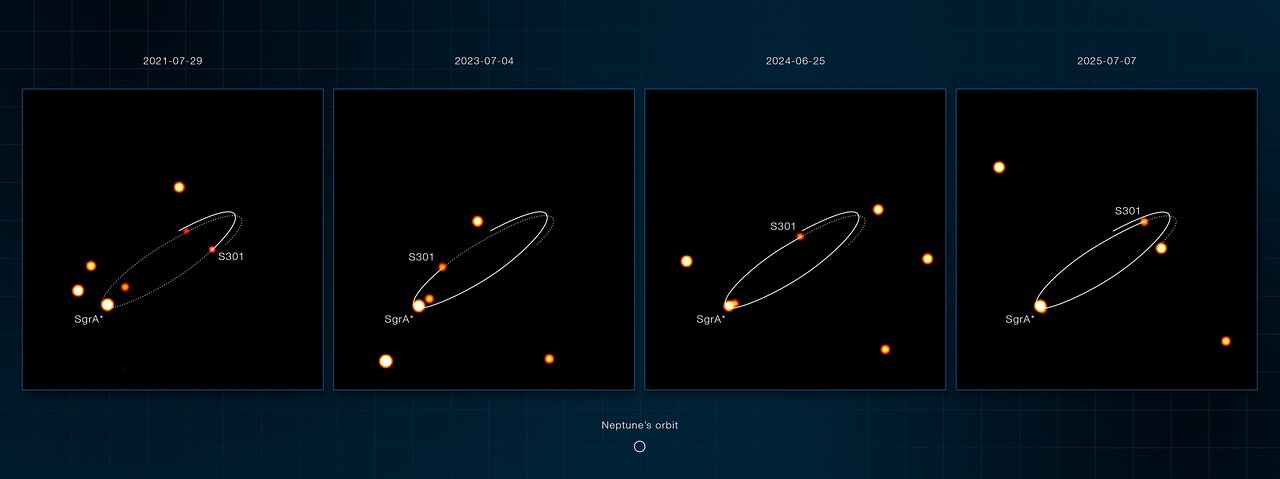
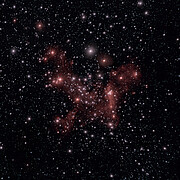
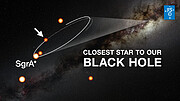
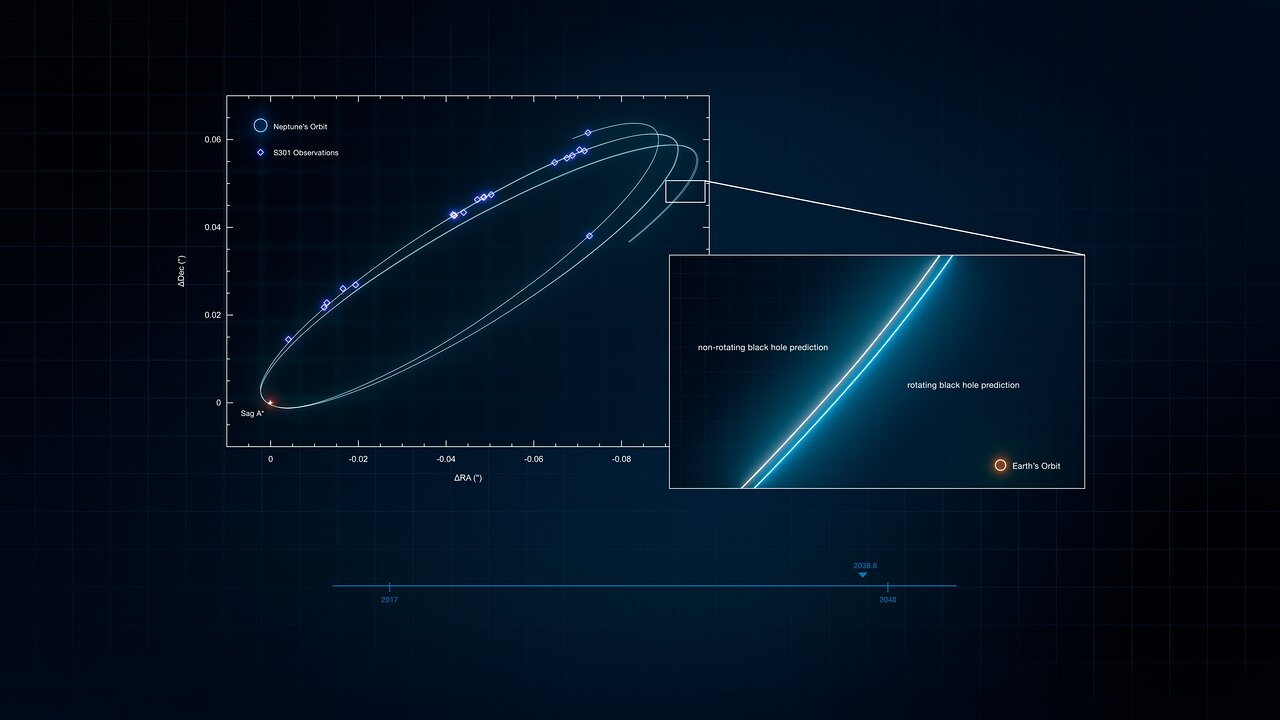
Astronomowie odkryli najszybszą znaną gwiazdę w naszej galaktyce, Drodze Mlecznej, krążącą wokół czarnej dziury w centrum. Gwiazda o nazwie S301 została wykryta przez Interferometr Bardzo Dużego Teleskopu (VLTI), należący do Europejskiego Obserwatorium Południowego (ESO). Osiąga prędkość 25 000 km/s, poruszając się dookoła czarnej dziury o masie czterech milionów mas Słońca. Dociera bliżej czarnej dziury niż inne dotąd obserwowane gwiazdy, tak blisko, że odczuwa efekty rotacji czarnej dziury.
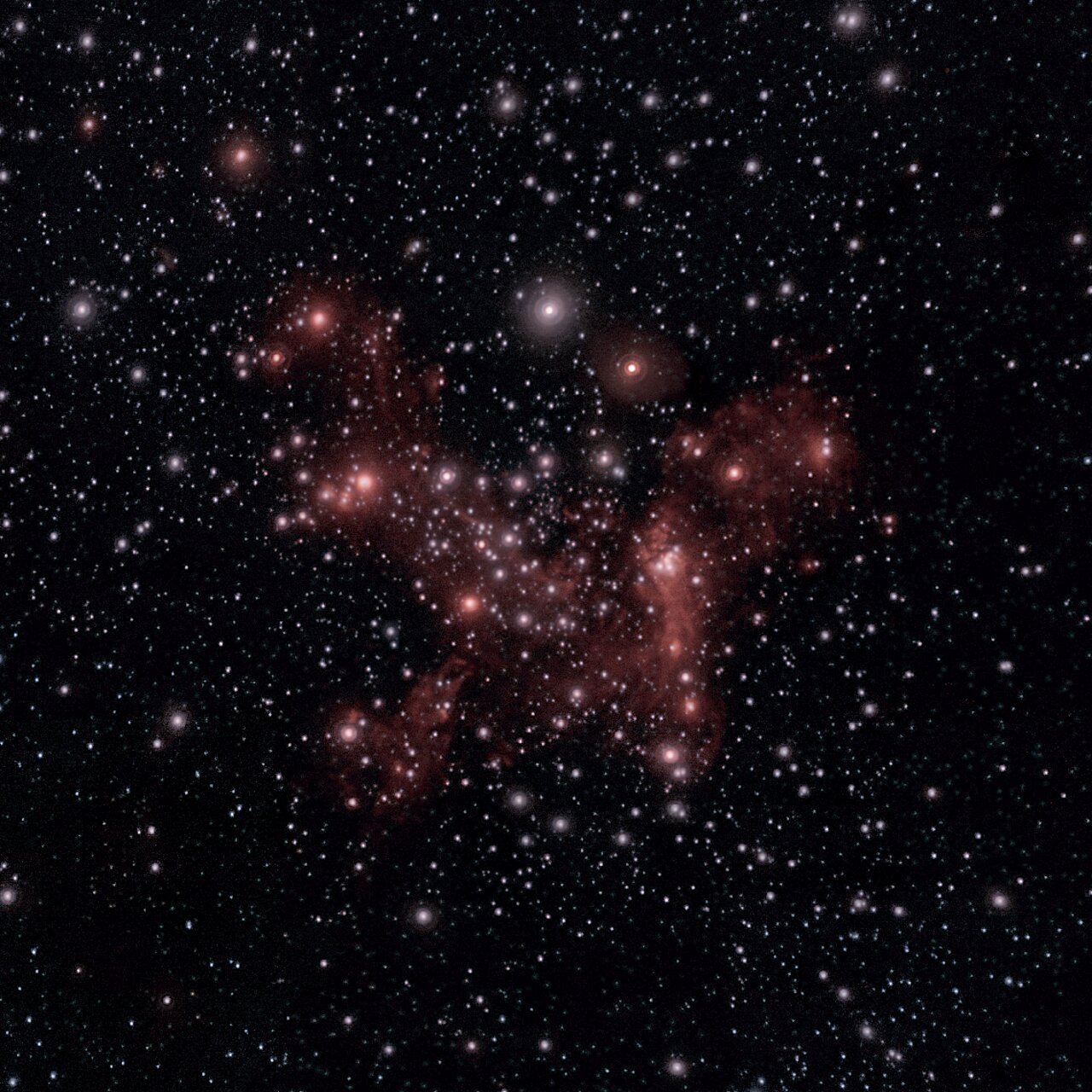
Dziesięciolecia starannego śledzenia gwiazd krążących wokół centralnej czarnej dziury naszej galaktyki, Sagittarius A*, doprowadziły do przełomowego odkrycia bardzo obiecującej gwiazdy S301. Ponieważ krąży tak blisko Sagittarius A*, otwiera nowe okno na fundamentalne własności czasoprzestrzeni w ekstremalnym środowisku czarnej dziury – mówi Reinhard Genzel, laureat Nagrody Nobla, dyrektor Max Planck Institute for Extraterrestrial Physics (MPE) w Garching w Niemczech, inicjator współpracy, która dokonała nowych obserwacji.
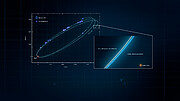
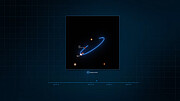
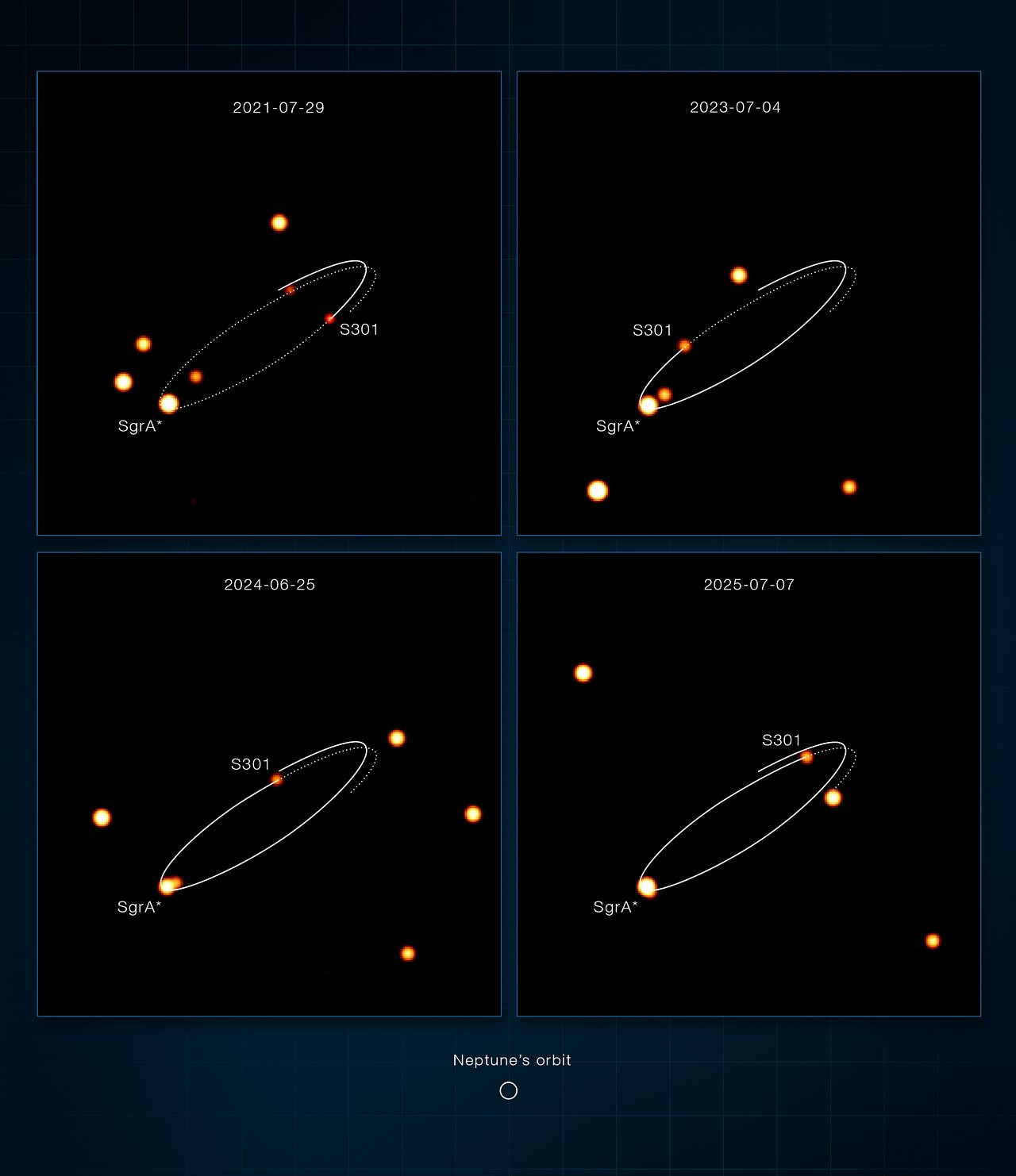
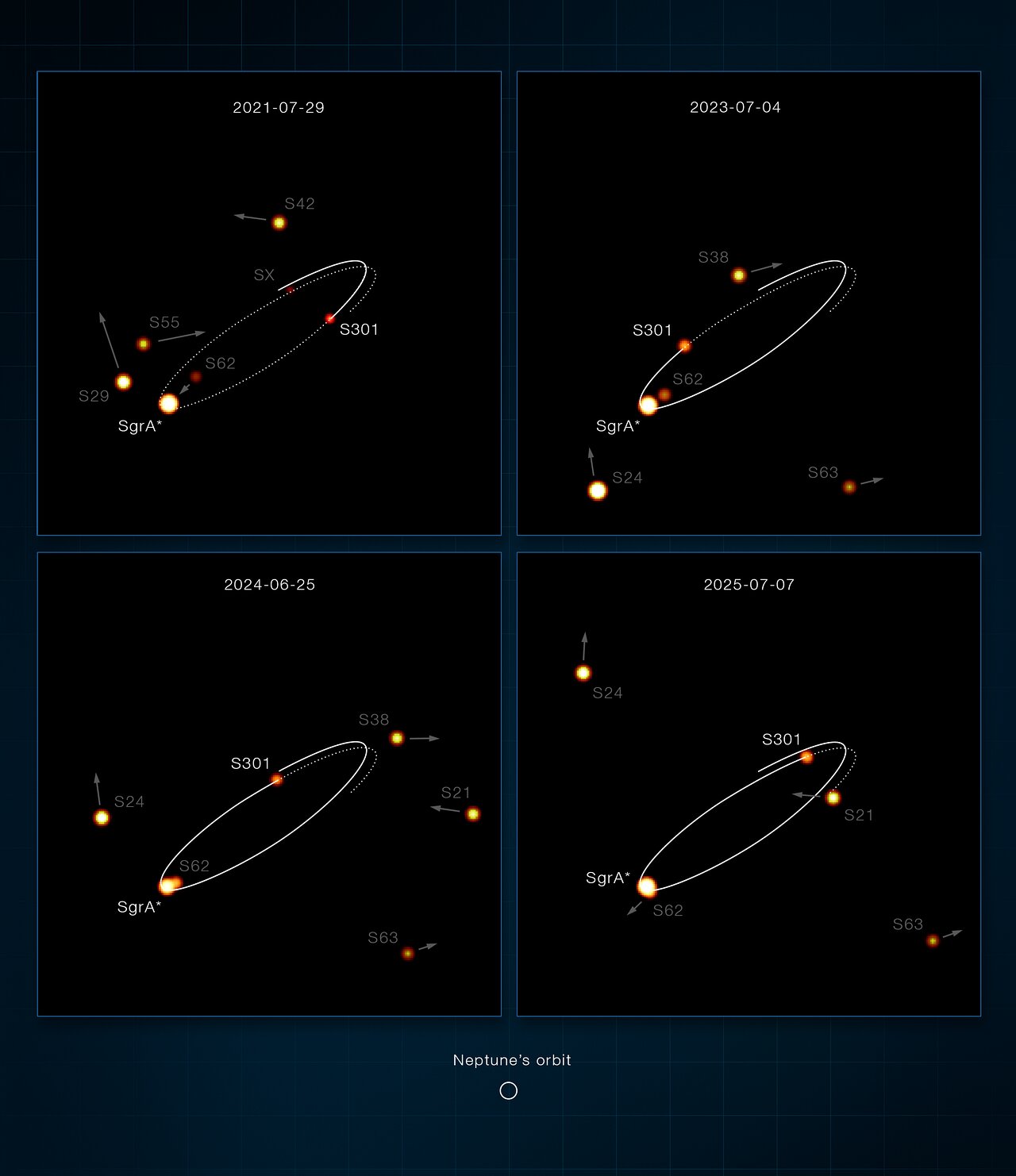
W przypadku tej gwiazdy wyjątkowe jest to, że krąży wokół Sagittarius A* po bardzo ciasnej orbicie, potrzebując jedynie 8,7 roku na pełen obieg. Co więcej, dociera do czarnej dziury na zaledwie 12 razy dalszy dystans niż odległość Ziemi od Słońca. To jest bezprecedensowe - tłumaczy Felix Mang, doktorant na MPE, autor badań opublikowanych w dzisiaj w Nature.
Podczas najbliższego przejścia obok czarnej dziury, gwiazda podróżuje z prędkością około 25 000 kilometrów na sekundę – 100 000 razy szybciej niż komercyjny samolot, albo ponad 8% prędkości światła – co czyni ją rekordzistką w kategorii najszybszej gwiazdy w Drodze Mlecznej. S301 dociera bliżej obiektu Sagittarius A* niż jakakolwiek inna obserwowana dotąd gwiazda, na dystans mniej więcej orbity Saturna wokół Słońca [1]. Ponieważ S301 znajduje się tak blisko Sagittarius A*, jest pierwszą znaną gwiazdą, której można użyć do bezpośredniego pomiaru rotacji czarnej dziury.
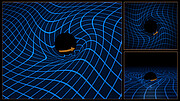
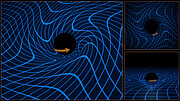
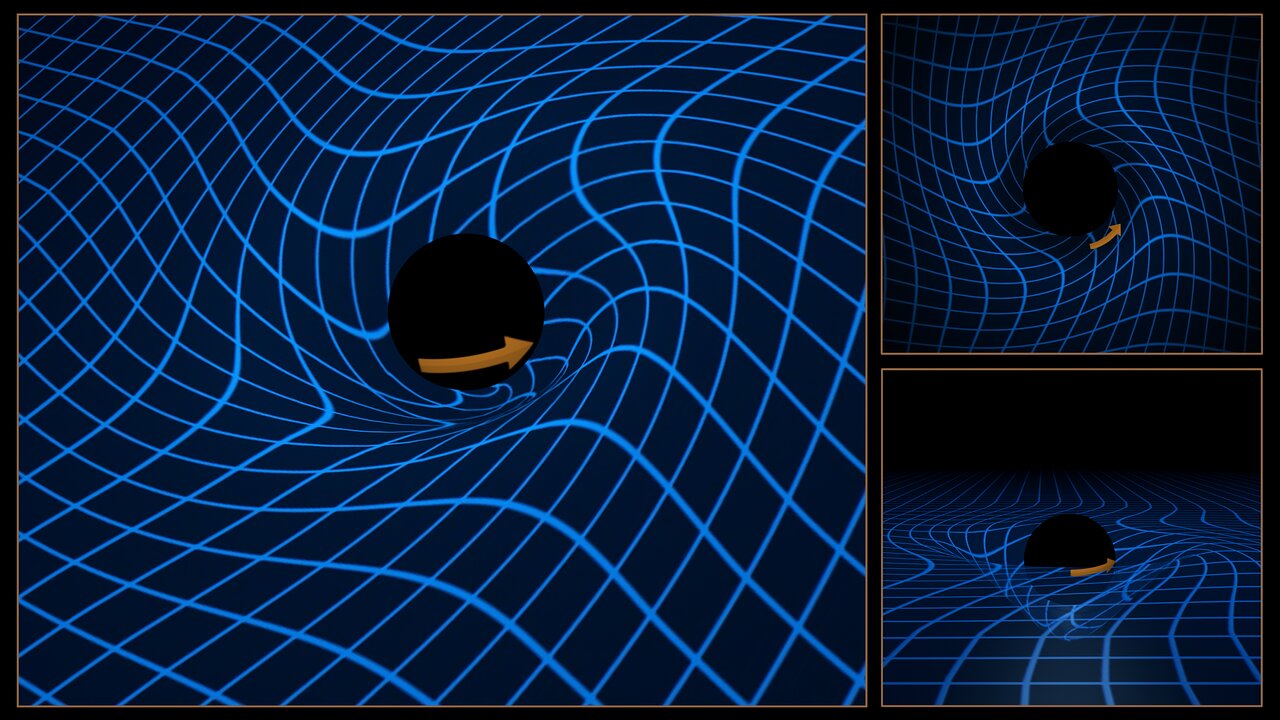
Astronomowie przewidują, że Sagittarius A* się obraca, podobnie, jak większość obiektów we Wszechświecie. Zgodnie z ogólną teorią względności Einsteina, obracają się czarna dziura ciągnie za sobą czasoprzestrzeń i ją skręca, co wpływa na orbity otaczających ją gwiazd. Efekt jest odczuwany silniej przez obiekty orbitujące w bliskiej odległości rotującej czarnej dziury.
Dzięki tej gwieździe mamy nadzieję zmierzyć w ciągu najbliższych 10 lat rotację czarnej dziury (jej spin), mówi Mang. Stefan Gillessen, naukowiec z MPE, który także odgrywał wiodącą rolę w nowych badaniach, dodaje: po raz pierwszy będziemy w stanie naprawdę dokładnie zmierzyć spin masywnej czarnej dziury, co będzie kluczowym testem dla teorii Einsteina. Juan Osorno, astronom z LIRA Observatoire de Paris–PSL we Francji, również z kluczową rolą w badaniach, dodaje: bez tej gwiazdy musielibyśmy mierzyć ruch innych gwiazd przez kilkadziesiąt kolejnych lat, aby zbliżyć się do pomiaru spinu czarnej dziury.
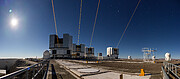
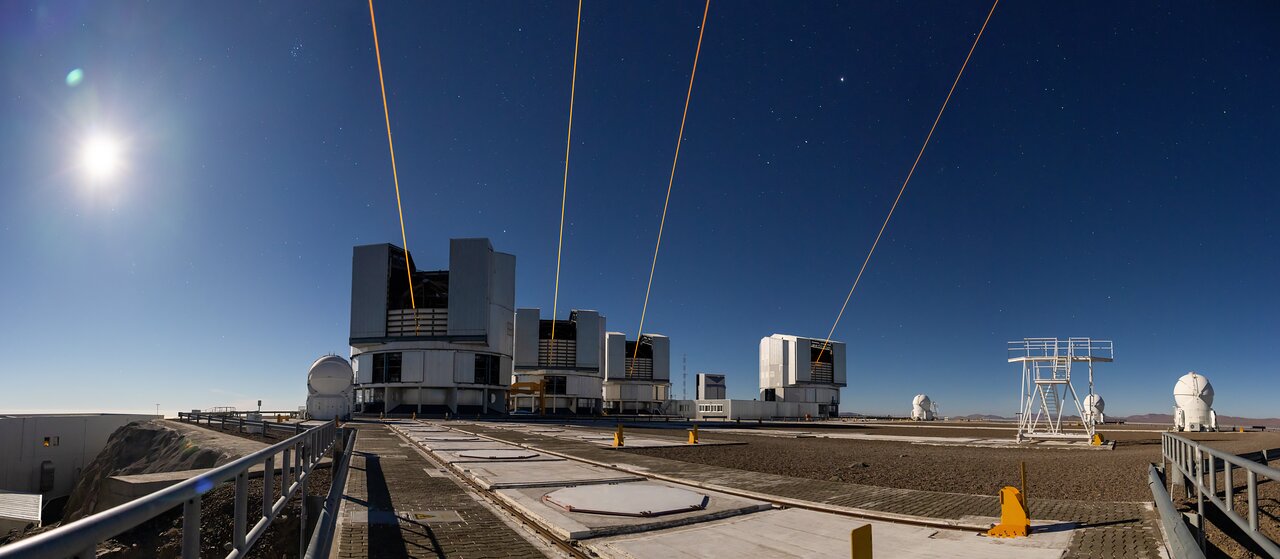
Znalezienie S301, która jest na niebie dwa miliardy razy słabsza niż Betelgeza (pomarańczowa gwiazd w gwiazdozbiorze Oriona), nie było łatwym zadaniem. Zespół użył VLTI, aparatury w Obserwatorium Paranal w Chile, należącym do ESO, wraz z jego instrumentem GRAVITY, obecnie znanym jako GRAVITY+, po modernizacjach infrastruktury. [2] Supermoc VLTI leży w zdolności łączenia światłą od czterech 8-metrowych teleskopów, aby utworzyć „wirtualny” teleskop o 15-krotnie lepszej rozdzielczości przestrzenną niż pojedynczy 8-metrowy teleskop.
Na całym świecie tylko Paranal jest miejscem, w którym można dokonać tego typu obserwacji, ponieważ żadne inne obserwatorium nie posiada czterech 8-metrowych teleskopów, które potrafią pracować wspólnie jako interferometr, tłumaczy współautor Frank Eisenhauer, kierownik naukowy GRAVITY+ oraz dyrektor MPE.
Dzięki GRAVITY, a potem GRAVITY+, zespołowi udało się dostrzec nową gwiazdę wiosną 2023 roku, a następnie śledzić ją w celu określenia orbity. Udało się też prześledzić historię orbitalną S301 wstecz do 2017 roku, odkrywając że dokonała największego zbliżenia do centralne czarnej dziury na początku 2023 roku. Właściwości orbitalne S301 oraz fakt, że gwiazda ta nie mogła powstać tak blisko masywnej czarnej dziury, wskazują że prawdopodobnie była częścią układu podwójnego, który został rozerwaniu przez siły pływowe Sagittarius A*. W tym procesie S301 została uwięziona przez grawitację czarnej dziury, a towarzysząca jej gwiazda została wyrzucona z dużą prędkością, najprawdopodobniej wystarczającą do całkowitego opuszczenia galaktyki.
Kolejne obserwacje za pomocą GRAVITY+ oraz instrument MICADO na nadchodzącym Ekstremalnie Wielkim Teleskopie (ELT), będą kluczowe do śledzenia trajektorii S301 przez następną dekadę, gdy dokona kolejnego najbliższego przejścia w 2031 roku. Obserwacje co najmniej dwóch pełnych orbit S301 pozwolą na ustalenie trajektorii z wystarczająco dużą precyzją, aby umożliwić grupie badawczej po raz pierwszy bezpośrednie określenie obrotu Sagittarius A*. To byłoby spełnienie marzeń – mówi Mang.
Uwagi
[1] W najbliższym punkcie Gwiazda przechodzi zaledwie 1,78 miliarda kilometrów od czarnej dziury, czyli około 12 razy dystans Słońce-Ziemia, albo 20% dalej niż odległość Słońce-Saturn.
[2] Kontynuując dziesięciolecia mapowania gwiazd orbitujących wokół centrum Drogi Mlecznej, przy pomocy różnych urządzeń ESO, zespół wykorzystuje do tego celu od 2017 roku instrument GRAVITY ma VLTI. Seria modernizacji zarówno instrumentu, jak i interferometru, nazwana GRAVITY+, był implementowana stopniowo w ciągu ostatnich kilku lat. Pozwala znajdować coraz słabsze obiekty.
Więcej informacji
Wyniki badań zaprezentowano w artykule autorstwa GRAVITY+ Collaboration, pt. „Discovery of a star sensitive to the spin of Sgr A*”, który ukaże się w Nature (doi: 10.1038/s41586-026-10894-w).
Skład zespołu badawczego: K. Abd El Dayem (LIRA, Observatoire de Paris, Universitê PSL, CNRS, Sorbonne Université, Université de Paris, Francja), R. Abuter (European Southern Observatory, Garching, Niemcy [ESO Germany]), N. Aimar (Faculdade de Engenharia, Universidade do Porto, Portugalia [FEUP] oraz Centro de Astrofísica e Gravitação, IST, Universidade de Lisboa, Portugalia [CENTRA]), P. Amaro-Seoane (Universitat Politècnica de València, Hiszpania oraz Max Planck Institute for Extraterrestrial Physics, Garching, Niemcy [MPE]), A. Berdeu (ESO oraz LIRA), J. P. Berger (Univ. Grenoble Alpes, CNRS, Grenoble, Francja [IPAG]), G. Bourdarot (MPE), W. Brandner (Max Planck Institute for Astronomy, Heidelberg, Niemcy [MPIA]), A. Burkert (University Observatory, Faculty of Physics, Ludwig-Maximilians-Universität, Monachium, Niemcy [LMU] oraz MPE), D. Calderon (Max Planck Institute for Astrophysics [MPA], Garching, Niemcy), C. Correia (FEUP oraz CENTRA), J. Cuadra (Universidad Adolfo Ibañez, Viña del Mar, Chile oraz Millennium Nucleus on Transversal Research and Technology to Explore Supermassive Black Holes [TITANS], Chile), R. Davies (MPE), D. Defrère (Institute of Astronomy, KU Leuven, Belgia [KU Leuven]), L. Delit (LIRA), A. Drescher (IPAG and MPE), F. Eisenhauer (MPE oraz Department of Physics, Technical University of Munich, Niemcy [TUM]), L. Esteras Otal (ESO Germany), M. Fabricius (MPE), H. Feuchtgruber (MPE), N. M. Förster Schreiber (MPE), A. Foschi (LIRA), P. Garcia (FEUP oraz CENTRA), R. Garcia Lopez (School of Physics, University College Dublin, Irlandia), A. Generozov Astronomy Dept. and Oden Institute, University of Texas w Austin, USA), R. Genzel (MPE oraz Departments of Physics & Astronomy, Le Conte Hall, University of California, Berkeley, USA) S. Gillessen (MPE), F. Gonté (ESO Germany), X. Haubois (European Southern Observatory, Santiago, Chile [ESO Chile]), S. F. Hönig (School of Physics & Astronomy, University of Southampton, Wielka Brytania[Southampton]), M. Houllé (IPAG), S. Joharle (MPE), A. Kaufer (ESO Chile), J. Kammerer (ESO Germany), P. Kervella (LIRA), J. Kolb (ESO Germany), L. Kreidberg (MPIA), R. Laugier (KU Leuven), S. Lacour (LIRA), O. Lai (Université Côte d’Azur, Observatoire de la Côte d’Azur, CNRS, Laboratoire Lagrange [Lagrange]), J.-B. Le Bouquin (IPAG), J. Leftley (Southampton) B. Lopez (Lagrange), D. Lutz (MPE), F. Mang (MPE and TUM), A. Mérand (ESO Germany), F. Millour (Lagrange), M. Montargès (LIRA), N. Morujão (FEUP and CENTRA), H. Nowacki (Lagrange), M. Nowak (LIRA), S. Oberti (ESO Germany), J. Osorno (LIRA), T. Ott (MPE), T. Paumard (LIRA), C. Paladini (ESO Chile), H. B. Perets (Physics department, Technion - Israel Institute of Technology, Haifa, Israel), K. Perraut (IPAG), G. Perrin (LIRA), R. Petrov (Lagrange) P. O. Petrucci (IPAG), T. Piran (Racah Institute of Physics, The Hebrew University of Jerusalem, Israel [Racah]), N. Pourré (IPAG), S. Rabien (MPE), D. C. Ribeiro (MPE), S. Robbe-Dubois (Lagrange), M. Sadun Bordoni (MPE), J. Sánchez Bermúdez (Instituto de Astronomía, National Autonomous University of Mexico, Meksyk), D. Santos (MPE), R. Sari (Racah) J. Sauter (MPIA), S. Scheithauer (MPIA), J. Scigliuto (Lagrange) J. Shangguan (MPE), T. T. Shimizu (MPE), F. Soulez (Univ. Lyon, Univ. Lyon 1, ENS de Lyon, CNRS, Centre de Recherche Astrophysique de Lyon, Francja), J. Stadler (LMU), C. Straubmeier (1st Institute of Physics, University of Cologne, Niemcy), E. Sturm (MPE), M. Subroweit (Cologne), C. Sykes (Southampton), L. J. Tacconi (MPE), P. Thévenet (LIRA), I. Urso (LIRA), F. Vincent (LIRA), J. Woillez (ESO Germany), G. Zins (ESO Chile).
Europejskie Obserwatorium Południowe (ESO) umożliwia naukowcom z całego świata na odkrywanie tajemnic Wszechświata z korzyścią dla nas wszystkich. Projektujemy, budujemy i zarządzamy światowej klasy obserwatoriami naziemnymi – których astronomowie używają do odpowiadania na ciekawe pytania i szerzenia fascynacji astronomią – a także promujemy międzynarodową współpracę w astronomii. Ustanowione w 1962 roku jako organizacja międzynarodowa, ESO jest wspierane przez 16 krajów członkowskich (Austria, Belgia, Czechy, Dania, Finlandia, Francja, Hiszpania, Irlandia, Holandia, Niemcy, Polska, Portugalia, Szwajcaria, Szwecja, Wielka Brytania oraz Włochy), a także Chile jako kraj gospodarz, oraz Australię jako strategicznego partnera. Siedziba ESO, a także jego centrum popularyzacji nauki i planetarium (ESO Supernova) znajdują się w pobliżu Monachium w Niemczech, natomiast chilijska pustynia Atakama – niesamowite miejsce z wyjątkowymi warunkami do obserwacji nieba – jest domem dla naszych teleskopów. ESO zarządza trzema lokalizacjami obserwacyjnymi w Chile: La Silla, Paranal i Chajnantor. W Paranal ESO posiada teleskop VLT (Very Large Telescope – Bardzo Duży Teleskop) oraz dwa teleskopy do przeglądów nieba. VISTA pracuje w podczerwieni, VLT Survey Telescope w zakresie widzialnym. W Paranal ESO zarządza także południowym obserwatorium CTA (Cherenkov Telescope Array South) – największym na świecie i najbardziej czułym obserwatorium promieniowania gamma. Wspólnie z międzynarodowymi partnerami ESO zarządza także radioteleskopami APEX i ALMA, które są instrumentami do obserwacji nieba w zakresach milimetrowym i submilimetrowym. Na Cerro Armazones, niedaleko Paranal, budujemy „największe oko świata na niebo”, czyli Ekstremalnie Wielki Teleskop (Extremely Large Telescope, ELT). Nasza działalność w Chile jest zarządzana z biur ESO w Santiago, gdzie współpracujemy też z chilijskimi partnerami.
Linki
- Publikacja naukowa
- Zdjęcia VLT/I
- Find Dowiedz się swięcej o Ekstremalnie Wielkim Teleskopie (ELT), na dedykowanej witrynie ESO oraz w zestawie dla mediów
- Dla dziennikarzy: zasubskrybuj, aby otrzymywać w swoim języku nasze komunikaty prasowe z embarg omedialnym
- Dla naukowców: jesli masz ciekawy temat, zgłoś swoje badania
Kontakt
Felix Mang
Max Planck Institute for Extraterrestrial Physics
Garching bei München, Germany
Tel.: +49 89 30000-3713
E-mail: fmang@mpe.mpg.de
Stefan Gillessen
Max Planck Institute for Extraterrestrial Physics
Garching bei München, Germany
Tel.: +49 89 30000 3839
Tel. kom.: +49 176 99 66 41 39
E-mail: ste@mpe.mpg.de
Juan Osorno
Laboratory for Instrumentation and Research in Astrophysics (LIRA), Observatoire de Paris, PSL University
Meudon, France
E-mail: Juan.Osorno@observatoiredeparis.psl.eu
Frank Eisenhauer
Director, Max Planck Institute for Extraterrestrial Physics
Garching bei München, Germany
Tel.: +49 89 30000-3100
E-mail: eisenhau@mpe.mpg.de
Reinhard Genzel
Director, Max Planck Institute for Extraterrestrial Physics
Garching bei München, Germany
Tel.: +49 89 30000 3281
E-mail: genzel@mpe.mpg.de
Xavier Haubois (for questions on VLTI)
European Southern Observatory
Paranal Observatory, Atacama Desert, Chile
E-mail: Xavier.Haubois@eso.org
Bárbara Ferreira
ESO Media Manager
Garching bei München, Germany
Tel.: +49 89 3200 6670 (unavailable before 17 August)
Tel. kom.: +49 151 241 664 00 (unavailable before 17 August)
E-mail: press@eso.org
Krzysztof Czart (Kontakt dla mediów Polska)
Sieć Popularyzacji Nauki ESO
oraz Urania - Postępy Astronomii
Toruń, Polska
Tel.: +48 513 733 282
E-mail: eson-poland@eso.org
O komunikacie
| Komunikat nr: | eso2612pl |
| Nazwa: | S301, Sagittarius A* |
| Typ: | Milky Way : Galaxy : Component : Central Black Hole |
| Facility: | Very Large Telescope Interferometer |
| Instrumenty: | GRAVITY+ |
| Science data: | 2026Natur.657..359A |
Zdjęcia


Filmy
Po angielsku


Our use of Cookies
We use cookies that are essential for accessing our websites and using our services. We also use cookies to analyse, measure and improve our websites’ performance, to enable content sharing via social media and to display media content hosted on third-party platforms.
ESO Cookies Policy
The European Organisation for Astronomical Research in the Southern Hemisphere (ESO) is the pre-eminent intergovernmental science and technology organisation in astronomy. It carries out an ambitious programme focused on the design, construction and operation of powerful ground-based observing facilities for astronomy.
This Cookies Policy is intended to provide clarity by outlining the cookies used on the ESO public websites, their functions, the options you have for controlling them, and the ways you can contact us for additional details.
What are cookies?
Cookies are small pieces of data stored on your device by websites you visit. They serve various purposes, such as remembering login credentials and preferences and enhance your browsing experience.
Categories of cookies we use
Essential cookies (always active): These cookies are strictly necessary for the proper functioning of our website. Without these cookies, the website cannot operate correctly, and certain services, such as logging in or accessing secure areas, may not be available; because they are essential for the website’s operation, they cannot be disabled.
Functional Cookies: These cookies enhance your browsing experience by enabling additional features and personalization, such as remembering your preferences and settings. While not strictly necessary for the website to function, they improve usability and convenience; these cookies are only placed if you provide your consent.
Analytics cookies: These cookies collect information about how visitors interact with our website, such as which pages are visited most often and how users navigate the site. This data helps us improve website performance, optimize content, and enhance the user experience; these cookies are only placed if you provide your consent. We use the following analytics cookies.
Matomo Cookies:
This website uses Matomo (formerly Piwik), an open source software which enables the statistical analysis of website visits. Matomo uses cookies (text files) which are saved on your computer and which allow us to analyze how you use our website. The website user information generated by the cookies will only be saved on the servers of our IT Department. We use this information to analyze www.eso.org visits and to prepare reports on website activities. These data will not be disclosed to third parties.
On behalf of ESO, Matomo will use this information for the purpose of evaluating your use of the website, compiling reports on website activity and providing other services relating to website activity and internet usage.
Matomo cookies settings:
Additional Third-party cookies on ESO websites: some of our pages display content from external providers, e.g. YouTube.
Such third-party services are outside of ESO control and may, at any time, change their terms of service, use of cookies, etc.
YouTube: Some videos on the ESO website are embedded from ESO’s official YouTube channel. We have enabled YouTube’s privacy-enhanced mode, meaning that no cookies are set unless the user actively clicks on the video to play it. Additionally, in this mode, YouTube does not store any personally identifiable cookie data for embedded video playbacks. For more details, please refer to YouTube’s embedding videos information page.
Cookies can also be classified based on the following elements.
Regarding the domain, there are:
- First-party cookies, set by the website you are currently visiting. They are stored by the same domain that you are browsing and are used to enhance your experience on that site;
- Third-party cookies, set by a domain other than the one you are currently visiting.
As for their duration, cookies can be:
- Browser-session cookies, which are deleted when the user closes the browser;
- Stored cookies, which stay on the user's device for a predetermined period of time.
How to manage cookies
Cookie settings: You can modify your cookie choices for the ESO webpages at any time by clicking on the link Cookie settings at the bottom of any page.
In your browser: If you wish to delete cookies or instruct your browser to delete or block cookies by default, please visit the help pages of your browser:
Please be aware that if you delete or decline cookies, certain functionalities of our website may be not be available and your browsing experience may be affected.
You can set most browsers to prevent any cookies being placed on your device, but you may then have to manually adjust some preferences every time you visit a site/page. And some services and functionalities may not work properly at all (e.g. profile logging-in, shop check out).
Updates to the ESO Cookies Policy
The ESO Cookies Policy may be subject to future updates, which will be made available on this page.
Additional information
For any queries related to cookies, please contact: pdprATesoDOTorg.
As ESO public webpages are managed by our Department of Communication, your questions will be dealt with the support of the said Department.