Komunikat prasowy
Układ Słoneczny w trakcie tworzenia? Dostrzeżono dwie formujące się planety w dysku wokół młodej gwiazdy
24 marca 2026
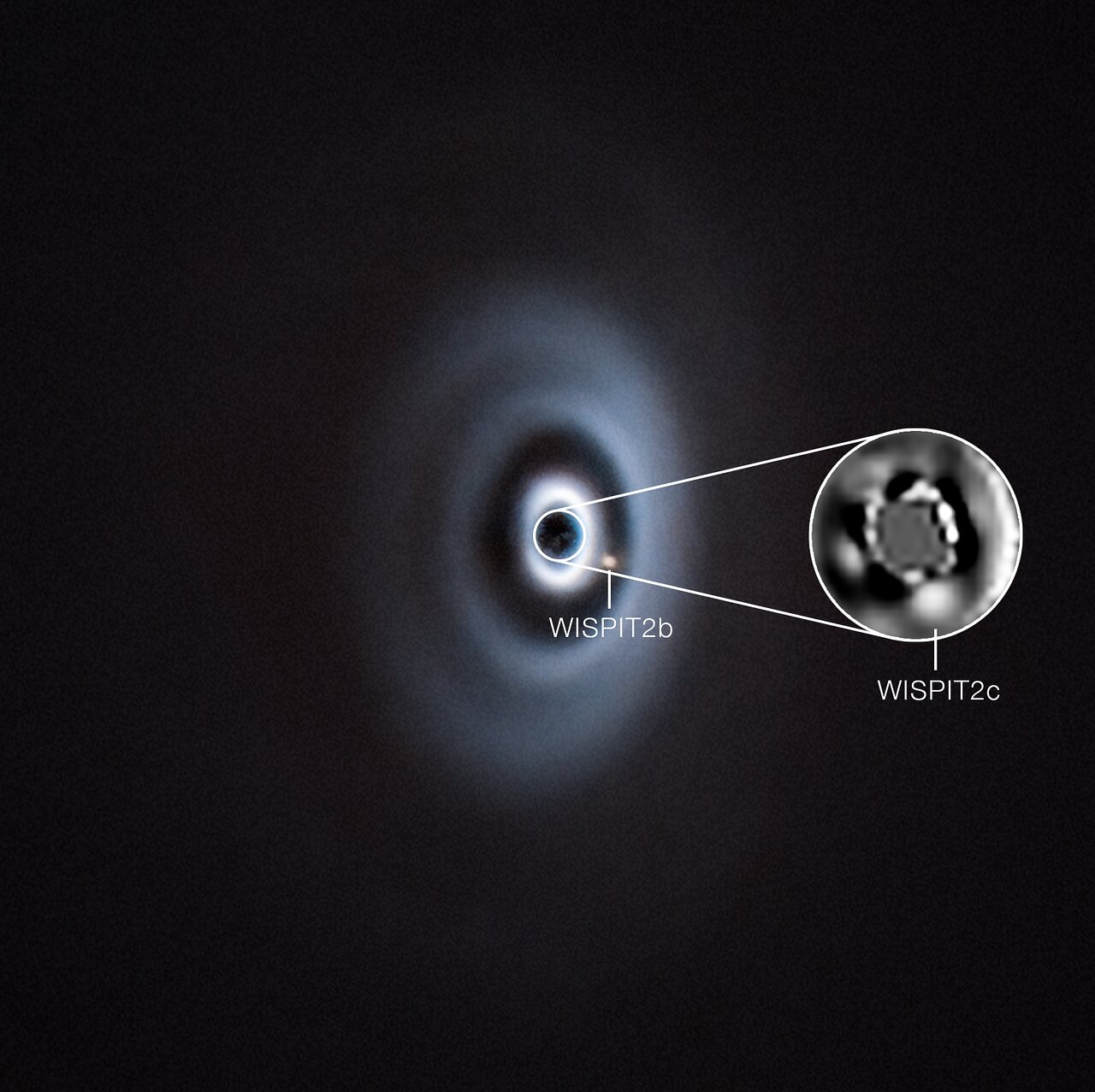
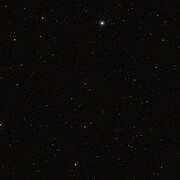
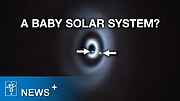
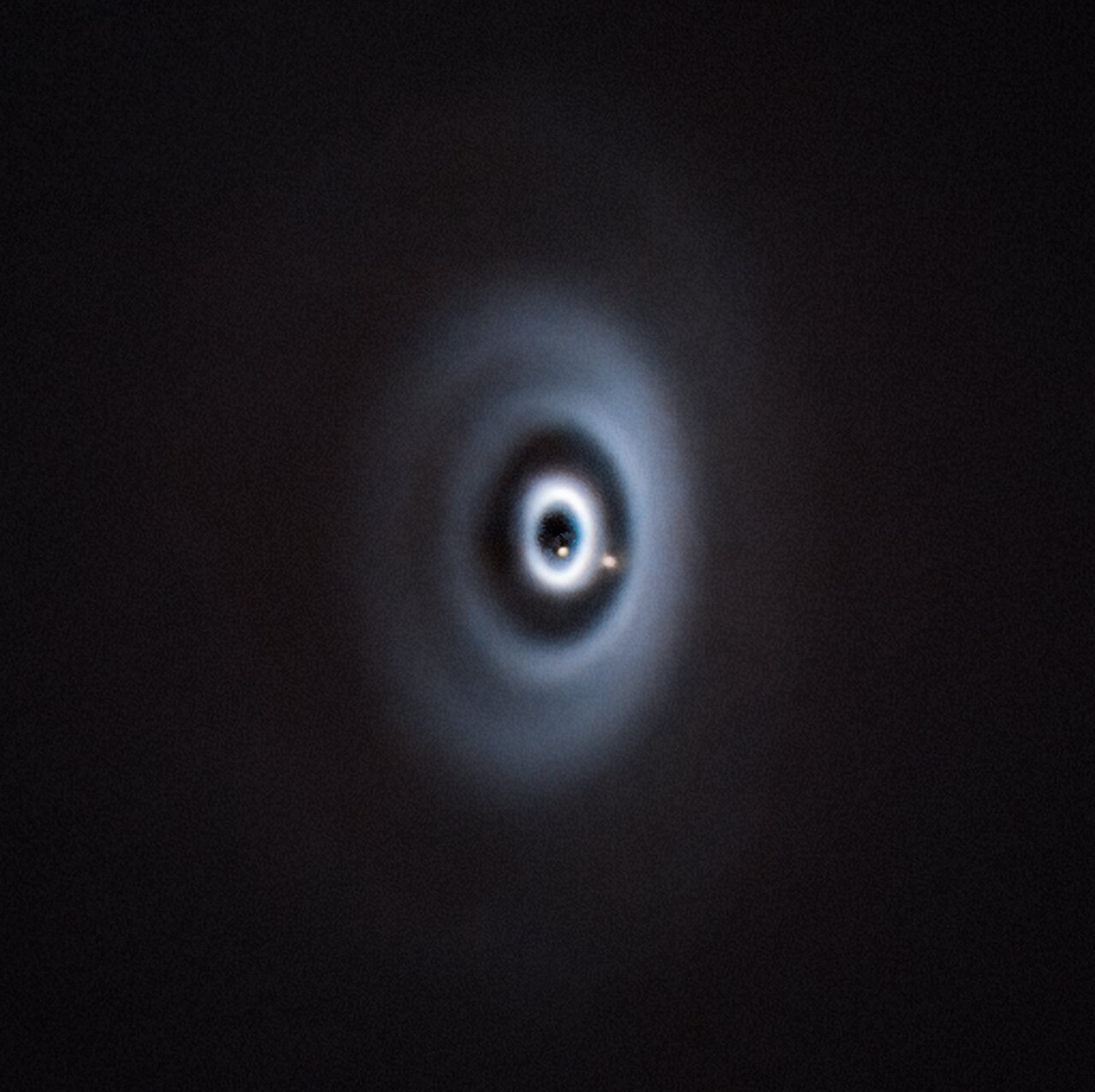
Astronomowie zaobserwowali dwie planety powstające w dysku wokół młodej gwiazdy WISPIT 2. Zespół badawczy, który wcześniej wykrył jedną planetę, użył teraz teleskopów Europejskiego Obserwatorium Południowego (ESO) do potwierdzenie istnienia drugiej planety. Te obserwacje oraz unikalna struktura dysku wokół gwiazdy, wskazują, że system WISPIT może przypominać młody Układ Słoneczny.
WISPIT 2 to najlepszy, jak dotąd przykład naszej własnej przeszłości, który możemy zobaczyć, mówi Chloe Lawlor, doktorant na University of Galway (Irlandia), pierwszy autor badań opublikowanych dzisiaj w The Astrophysical Journal Letters.
To dopiero drugi znany system, po PDS 70, w którym dwie planety zostały bezpośrednio zaobserwowane w procesie formowania się wokół swojej gwiazdy. Jednak w przeciwieństwie do PDS 70, WISPIT 2 ma bardzo rozległy dysk, w którym tworzą się planety, z wyraźnymi przerwami i pierścieniami. Te struktury sugerują, że tworzy się obecnie więcej planet, które z czasem uda się wykryć, mówi Lawlor.
WISPIT 2 udostępnia nam kluczowe laboratorium, nie tylko do obserwacji powstawania pojedynczej planety, ale całego systemu planetarnego, wskazuje Christian Ginski, współautor badań, naukowiec University of Galway. Dzięki takim obserwacjom, astronomowie pragną lepiej zrozumieć, w jaki sposób niemowlęce układy planetarne rozwijają się do bardziej dojrzałych, takich jak nasz własny.
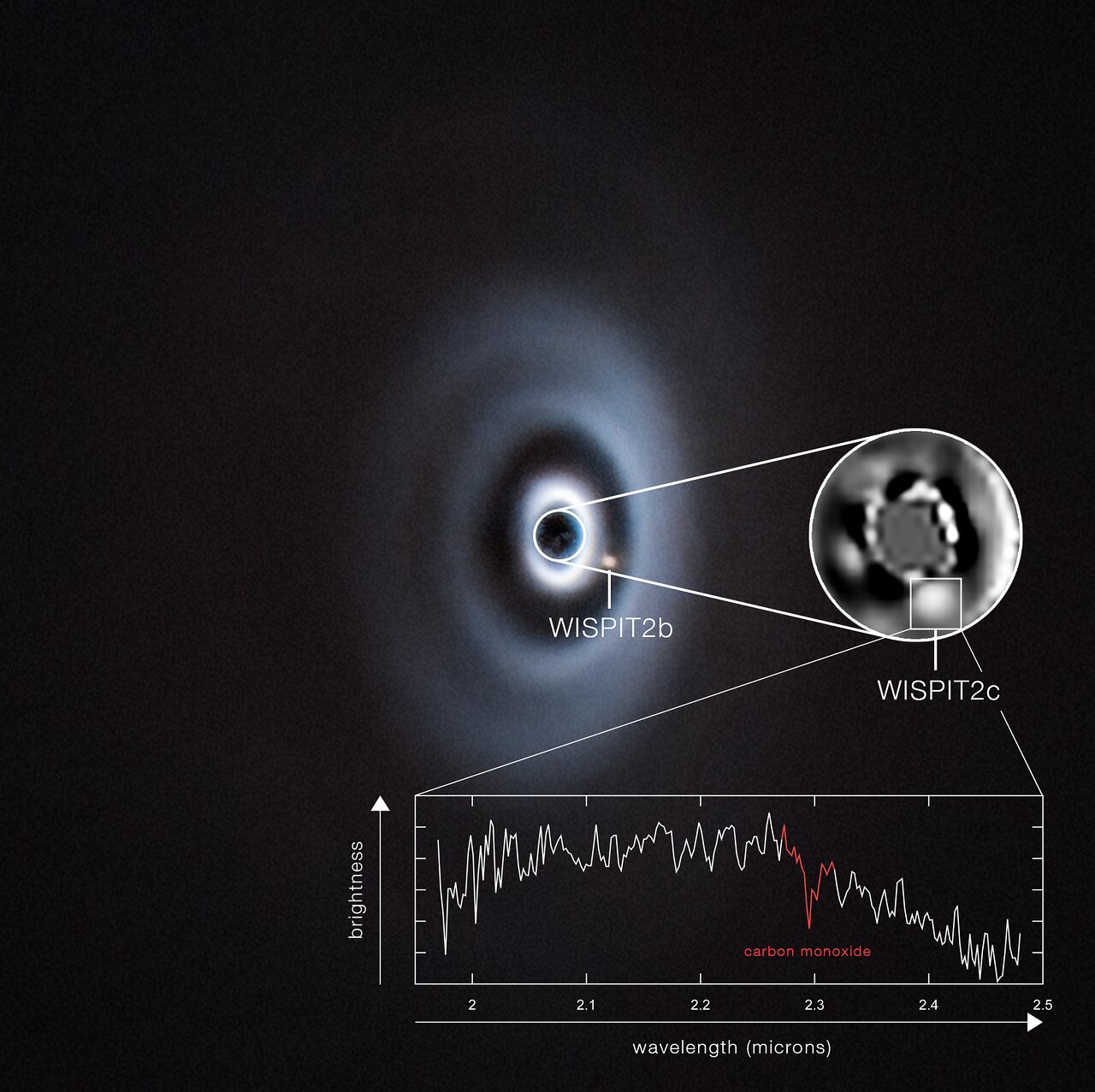
Pierwsza nowonarodzona planeta odnaleziona w tym systemie – nazwana WISPIT 2b – została wykryta w ubiegłym roku, ma masę prawie pięć razy większą niż Jowisz i krąży wokół gwiazdy centralnej w odległości około 60 razy dalszej niż Ziemia od Słońca. Ta detekcja nowego świata w trakcie tworzenia się naprawdę pokazała nam niesamowity potencjał obecnych instrumentów, powiedziała Richelle van Capelleveen, doktorantka w Leiden Observatory w Holandii, kierująca poprzednimi badaniami. Po zidentyfikowaniu dodatkowego obiektu obok gwiazdy [1], jego planetarną naturę potwierdziły pomiary przy pomocy należących do ESO: Bardzo Dużego Teleskopu (VLT) oraz Interferometru Bardzo Dużego Teleskopu (VLTI). Nowa planeta – WISPIT 2c – jest cztery razy bliżej gwiazdy centralnej oraz ma dwa razy większą masę niż WISPIT 2b. Obie planety to gazowe olbrzymy, podobne do zewnętrznych planet w Układzie Słonecznym.
Aby potwierdzić istnienie WISPIT 2c, zespół badawczy użył instrumentu SPHERE na teleskopie VLT, który uzyskał zdjęcie obiektu. Następnie badacze wykorzystali instrument GRAVITY+ na VLTI, aby potwierdzić, że obiekt faktycznie jest planetą. Co istotne, nasze badanie wykorzystało niedawną modernizację GRAVITY+, bez której nie bylibyśmy w stanie uzyskać tak wyraźnej detekcji planety położonej tak blisko swojej gwiazdy, tłumaczy Guillaume Bourdarot, współautor badań, naukowiec z Max Planck Institute for Extraterrestrial Physics, Garching w Niemczech.
Obie planety w WISPIT 2 znajdują się w wyraźnych przerwach w dysku pyłu i gazu wirującym wokół młodej gwiazdy. Przerwy te są efektem rozwoju każdej z planet: cząstki w dysku akumulują, ich grawitacja przyciąga więcej materiału, aż tworzy się planetarny embrion. Pozostały materiał wokół każdej z przerw, tworzy wyraźne pyłowe pierścienie w dysku.
Oprócz przerw, w których znaleziono planety, jest jeszcze co najmniej jedna mniejsza przerwa w dalszej odległości w dysku WISPIT 2. Podejrzewamy, że może ją rzeźbić trzecia planeta – mówi Lawlor – potencjalnie od masie Saturna, przez co przerwa jest węższa i płytsza. Zespół pragnie wykonać dalsze obserwacje. Ginski wskazuje, że dzięki nadchodzącemu Ekstremalnie Wielkiemu Teleskopowi (ELT), budowanemu przez ESO, można będzie bezpośrednio sfotografować taką planetę.
Uwagi
[1] Pierwsze wskazówki na temat istnienia drugiej planety pochodzą z obserwacji wykonanych 6,5-metrowym Teleskopem Magellana w Chile (instrument MagAO-X należący do Uniwersytetu Arizony) oraz Large Binocular Telescope Interferometer w USA (instrument LMIRcam należący do Uniwersytetu Vriginii).
Więcej informacji
Wyniki badań opisano w artykule, który ukaże się w The Astrophysical Journal Letters (https://doi.org/10.3847/2041-8213/ae4b3b).
Skład zespołu badawczego: C. Lawlor (School of Natural Sciences, Centre for Astronomy and Ryan Institute, University of Galway, Irlandia [Galway]), R. F. van Capelleveen (Leiden Observatory, Leiden University, Holandia [Leiden]), G. Bourdarot (Max Planck Institute for Extraterrestrial Physics, Garching, Niemcy [MPE]), C. Ginski (Galway and Center for Astronomical Adaptive Optics, Department of Astronomy, University of Arizona, Tucson, USA [CAAO]), M. A. Kenworthy (Leiden), T. Stolker (Leiden), L. Close (CAAO), A. J. Bohn (Leiden), F. Eisenhauer (MPE oraz Department of Physics, Technical University of Munich, Garching, Niemcy), P. Garcia (Faculdade de Engenharia, Universidade do Porto, Portugal oraz CENTRA – Centro de Astrofísica e Gravitação, IST, Universidade de Lisboa, Portugal), S. F. Honig (School of Physics and Astronomy, University of Southampton, Wielka Brytania), J. Kammerer (European Southern Observatory, Garching, Niemcy), L. Kreidberg (Max Planck Institute for Astronomy, Heidelberg, Germany), S. Lacour (LIRA, Observatoire de Paris, Université PSL, CNRS, Sorbonne Université, Université de Paris, Meudon, Francja), J.-B. Le Bouquin (Univ. Grenoble Alpes, CNRS, IPAG, Grenoble, Francja), E. Mamajek (Jet Propulsion Laboratory, California Institute of Technology, Pasadena, California, USA), M. Nowak (LIRA), T. Paumard (LIRA), C. Straubmeier (1st Institute of Physics, University of Cologne, Germany), N. van der Marel (Leiden) and the exoGRAVITY Collaboration.
Europejskie Obserwatorium Południowe (ESO) umożliwia naukowcom z całego świata na odkrywanie tajemnic Wszechświata z korzyścią dla nas wszystkich. Projektujemy, budujemy i zarządzamy światowej klasy obserwatoriami naziemnymi – których astronomowie używają do odpowiadania na ciekawe pytania i szerzenia fascynacji astronomią – a także promujemy międzynarodową współpracę w astronomii. Ustanowione w 1962 roku jako organizacja międzynarodowa, ESO jest wspierane przez 16 krajów członkowskich (Austria, Belgia, Czechy, Dania, Finlandia, Francja, Hiszpania, Irlandia, Holandia, Niemcy, Polska, Portugalia, Szwajcaria, Szwecja, Wielka Brytania oraz Włochy), a także Chile jako kraj gospodarz, oraz Australię jako strategicznego partnera. Siedziba ESO, a także jego centrum popularyzacji nauki i planetarium (ESO Supernova) znajdują się w pobliżu Monachium w Niemczech, natomiast chilijska pustynia Atakama – niesamowite miejsce z wyjątkowymi warunkami do obserwacji nieba – jest domem dla naszych teleskopów. ESO zarządza trzema lokalizacjami obserwacyjnymi w Chile: La Silla, Paranal i Chajnantor. W Paranal ESO posiada teleskop VLT (Very Large Telescope – Bardzo Duży Teleskop) oraz dwa teleskopy do przeglądów nieba. VISTA pracuje w podczerwieni, VLT Survey Telescope w zakresie widzialnym. W Paranal ESO zarządza także południowym obserwatorium CTA (Cherenkov Telescope Array South) – największym na świecie i najbardziej czułym obserwatorium promieniowania gamma. Wspólnie z międzynarodowymi partnerami ESO zarządza także radioteleskopami APEX i ALMA, które są instrumentami do obserwacji nieba w zakresach milimetrowym i submilimetrowym. Na Cerro Armazones, niedaleko Paranal, budujemy „największe oko świata na niebo”, czyli Ekstremalnie Wielki Teleskop (Extremely Large Telescope, ELT). Nasza działalność w Chile jest zarządzana z biur ESO w Santiago, gdzie współpracujemy też z chilijskimi partnerami.
Linki
- Publikacja naukowa
- Zdjęcia VLT/I
- Dowiedz się więce jo Ekstremalnie Wielkim Teleskopie (ELT) na naszej dedykowanej witrynie i w paczce prasowej
- Dzla dziennikarzy: zasubskrybuj, aby otrzymywać w swoim języku komunikaty prasowe z embargo medialnym
- Dla naukowców: jesli masz ciekawy temat, zgłoś swoje badania
Kontakt
Chloe Lawlor
University of Galway
Galway, Ireland
E-mail: c.lawlor13@universityofgalway.ie
Christian Ginski
University of Galway
Galway, Ireland
E-mail: christian.ginski@universityofgalway.ie
Richelle van Capelleveen
Leiden Observatory, Leiden University
Leiden, the Netherlands
E-mail: capelleveen@strw.leidenuniv.nl
Guillaume Bourdarot
Max Planck Institute for Extraterrestrial Physics
Garching, Germany
Tel.: +498930000-3295
E-mail: bourdarot@mpe.mpg.de
Bárbara Ferreira
ESO Media Manager
Garching bei München, Germany
Tel.: +49 89 3200 6670
Tel. kom.: +49 151 241 664 00
E-mail: press@eso.org
Krzysztof Czart (Kontakt dla mediów Polska)
Sieć Popularyzacji Nauki ESO
oraz Urania - Postępy Astronomii
Toruń, Polska
Tel.: +48 513 733 282
E-mail: eson-poland@eso.org
O komunikacie
| Komunikat nr: | eso2604pl |
| Nazwa: | WISPIT 2b, WISPIT 2c |
| Typ: | Milky Way : Star : Circumstellar Material : Disk : Protoplanetary |
| Facility: | Very Large Telescope, Very Large Telescope Interferometer |
| Instrumenty: | GRAVITY+, SPHERE |
| Science data: | 2026ApJ..1000L..38L |
Zdjęcia
Filmy
Our use of Cookies
We use cookies that are essential for accessing our websites and using our services. We also use cookies to analyse, measure and improve our websites’ performance, to enable content sharing via social media and to display media content hosted on third-party platforms.
ESO Cookies Policy
The European Organisation for Astronomical Research in the Southern Hemisphere (ESO) is the pre-eminent intergovernmental science and technology organisation in astronomy. It carries out an ambitious programme focused on the design, construction and operation of powerful ground-based observing facilities for astronomy.
This Cookies Policy is intended to provide clarity by outlining the cookies used on the ESO public websites, their functions, the options you have for controlling them, and the ways you can contact us for additional details.
What are cookies?
Cookies are small pieces of data stored on your device by websites you visit. They serve various purposes, such as remembering login credentials and preferences and enhance your browsing experience.
Categories of cookies we use
Essential cookies (always active): These cookies are strictly necessary for the proper functioning of our website. Without these cookies, the website cannot operate correctly, and certain services, such as logging in or accessing secure areas, may not be available; because they are essential for the website’s operation, they cannot be disabled.
Functional Cookies: These cookies enhance your browsing experience by enabling additional features and personalization, such as remembering your preferences and settings. While not strictly necessary for the website to function, they improve usability and convenience; these cookies are only placed if you provide your consent.
Analytics cookies: These cookies collect information about how visitors interact with our website, such as which pages are visited most often and how users navigate the site. This data helps us improve website performance, optimize content, and enhance the user experience; these cookies are only placed if you provide your consent. We use the following analytics cookies.
Matomo Cookies:
This website uses Matomo (formerly Piwik), an open source software which enables the statistical analysis of website visits. Matomo uses cookies (text files) which are saved on your computer and which allow us to analyze how you use our website. The website user information generated by the cookies will only be saved on the servers of our IT Department. We use this information to analyze www.eso.org visits and to prepare reports on website activities. These data will not be disclosed to third parties.
On behalf of ESO, Matomo will use this information for the purpose of evaluating your use of the website, compiling reports on website activity and providing other services relating to website activity and internet usage.
Matomo cookies settings:
Additional Third-party cookies on ESO websites: some of our pages display content from external providers, e.g. YouTube.
Such third-party services are outside of ESO control and may, at any time, change their terms of service, use of cookies, etc.
YouTube: Some videos on the ESO website are embedded from ESO’s official YouTube channel. We have enabled YouTube’s privacy-enhanced mode, meaning that no cookies are set unless the user actively clicks on the video to play it. Additionally, in this mode, YouTube does not store any personally identifiable cookie data for embedded video playbacks. For more details, please refer to YouTube’s embedding videos information page.
Cookies can also be classified based on the following elements.
Regarding the domain, there are:
- First-party cookies, set by the website you are currently visiting. They are stored by the same domain that you are browsing and are used to enhance your experience on that site;
- Third-party cookies, set by a domain other than the one you are currently visiting.
As for their duration, cookies can be:
- Browser-session cookies, which are deleted when the user closes the browser;
- Stored cookies, which stay on the user's device for a predetermined period of time.
How to manage cookies
Cookie settings: You can modify your cookie choices for the ESO webpages at any time by clicking on the link Cookie settings at the bottom of any page.
In your browser: If you wish to delete cookies or instruct your browser to delete or block cookies by default, please visit the help pages of your browser:
Please be aware that if you delete or decline cookies, certain functionalities of our website may be not be available and your browsing experience may be affected.
You can set most browsers to prevent any cookies being placed on your device, but you may then have to manually adjust some preferences every time you visit a site/page. And some services and functionalities may not work properly at all (e.g. profile logging-in, shop check out).
Updates to the ESO Cookies Policy
The ESO Cookies Policy may be subject to future updates, which will be made available on this page.
Additional information
For any queries related to cookies, please contact: pdprATesoDOTorg.
As ESO public webpages are managed by our Department of Communication, your questions will be dealt with the support of the said Department.