Mitteilung
Mehr als die Hälfte des Riesenspiegels des ELT befindet sich nun in Chile
14. Oktober 2026
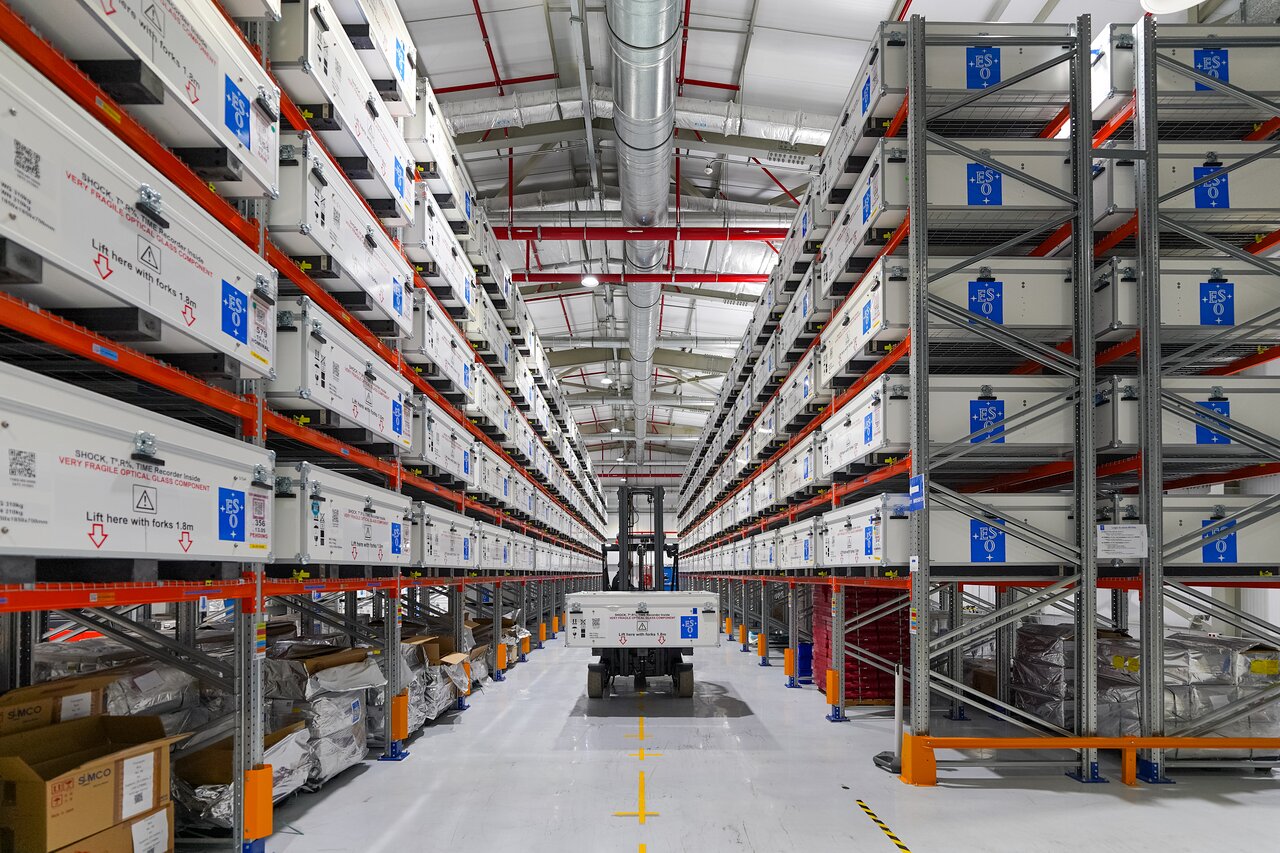
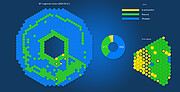
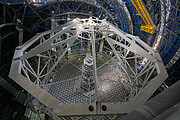
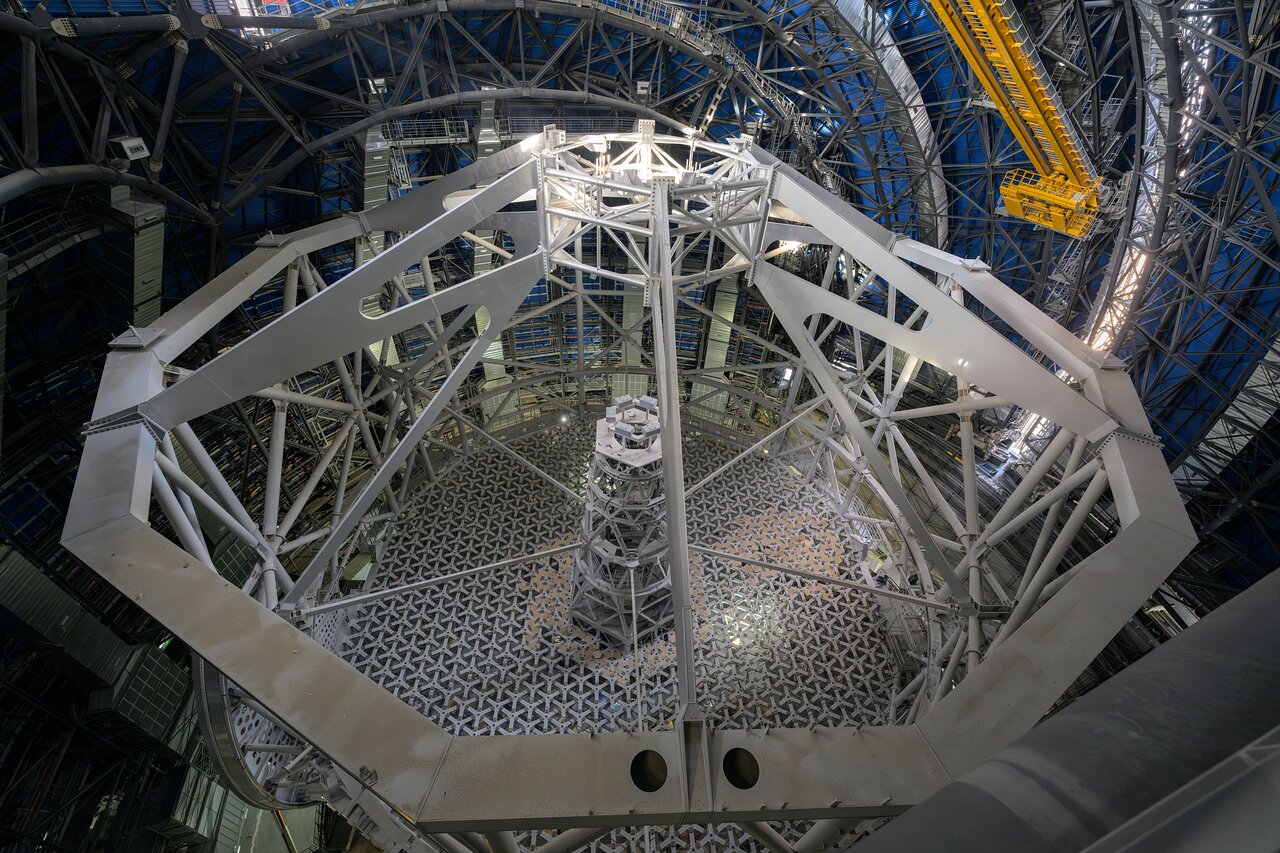
Stück für Stück macht sich der größte jemals gebaute Teleskopspiegel auf den Weg über den Atlantik. Fast 500 Segmente des Hauptspiegels des Extremely Large Telescope (ELT) der ESO sind inzwischen im ELT-Technikzentrum am ESO-Observatorium Paranal in Chile eingetroffen; das ist etwa die Hälfte aller Segmente, die für das künftige 39-Meter-„Auge am Himmel“ hergestellt werden. Zudem ist das letzte Segment bei Safran Reosc in Frankreich in Produktion gegangen. Es ist nicht möglich, einen so großen Spiegel aus einem einzigen Stück Glas herzustellen. Deshalb besteht der Hauptspiegel des ELT (M1) aus 798 einzelnen Segmenten, die als Einheit zusammenwirken, um den Kosmos eingehend und detailliert zu beobachten.
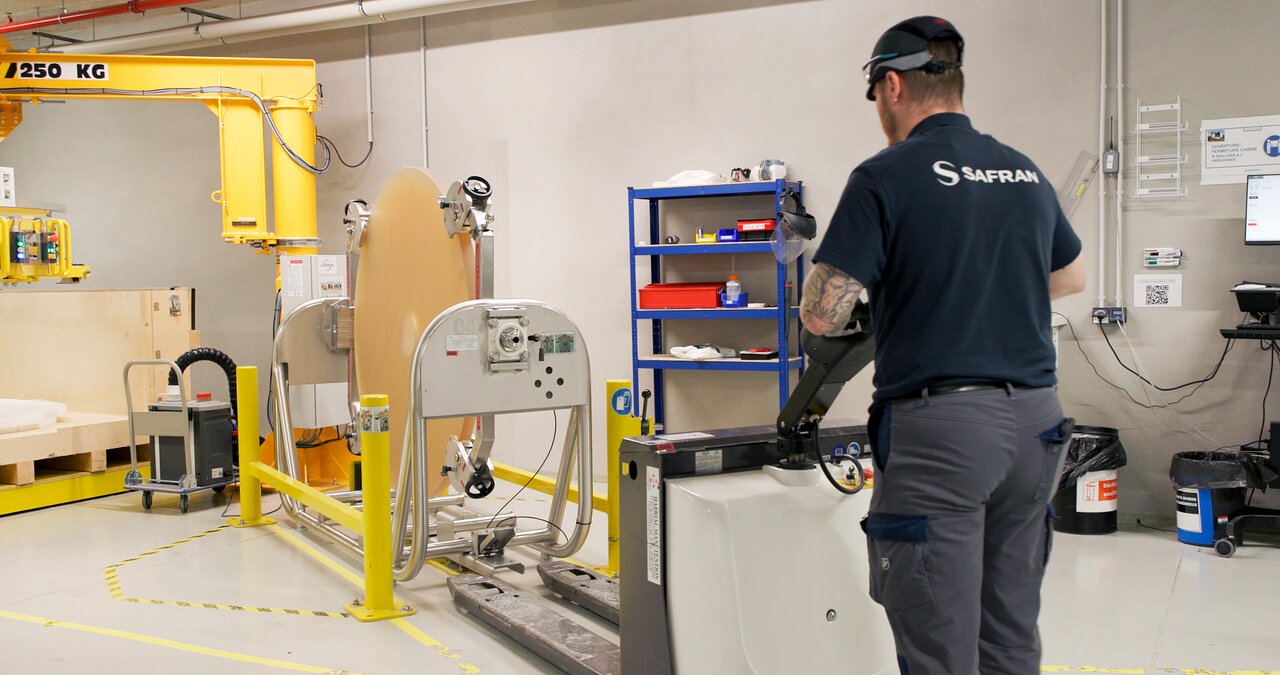
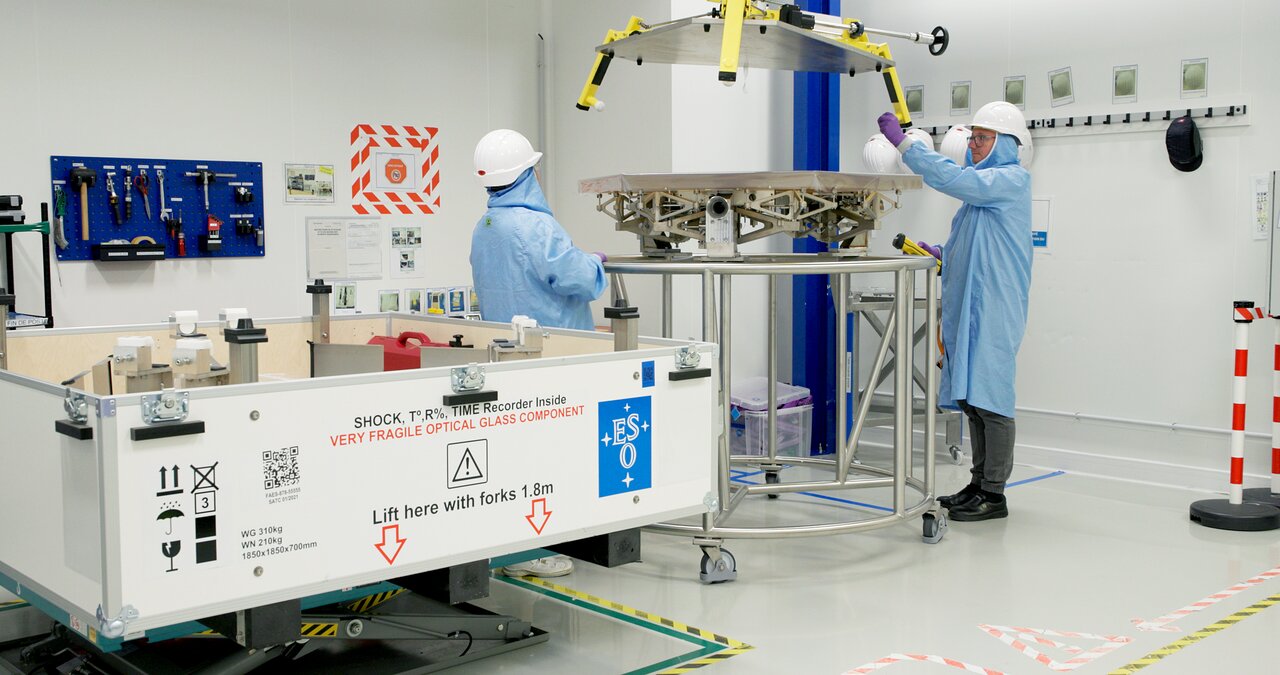
Die Herstellung der sechseckigen M1-Segmente ist ein komplexer Prozess, der die internationale Zusammenarbeit verdeutlicht, die das ELT erst möglich macht. Die Reise der Segmente begann in Deutschland, wo SCHOTT die Segmentrohlinge aus Zerodur© herstellte, einem Glaskeramikmaterial, das bei Temperaturschwankungen kaum Formveränderungen aufweist. Die Rohlinge wurden anschließend zu Safran Reosc in der Nähe von Poitiers, Frankreich, transportiert, um dort geformt, poliert und auf ihre Halterungen montiert zu werden, die von den beiden niederländischen Unternehmen TNO und VDL ETG Projects BV entworfen und hergestellt wurden. Das FAMES-Konsortium (Fogale, Frankreich; MicroEpsilon, Deutschland) entwarf und fertigte die Sensoren, die die relative Position jedes Segments überwachen. Das deutsche Unternehmen Physik Instrumente stellte die Aktuatoren her, die jedes Segment perfekt auf seine Nachbarsegmente ausgerichtet halten. Die letzte Etappe der Reise der M1-Segmente und ihrer Halterungen, die die meisten Baugruppen inzwischen hinter sich haben, ist eine 10.000 Kilometer lange Fahrt auf der Straße und per Schiff in die Atacama-Wüste – eine Aufgabe, die dem dänischen Unternehmen DSV übertragen wurde.
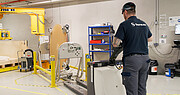
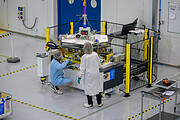
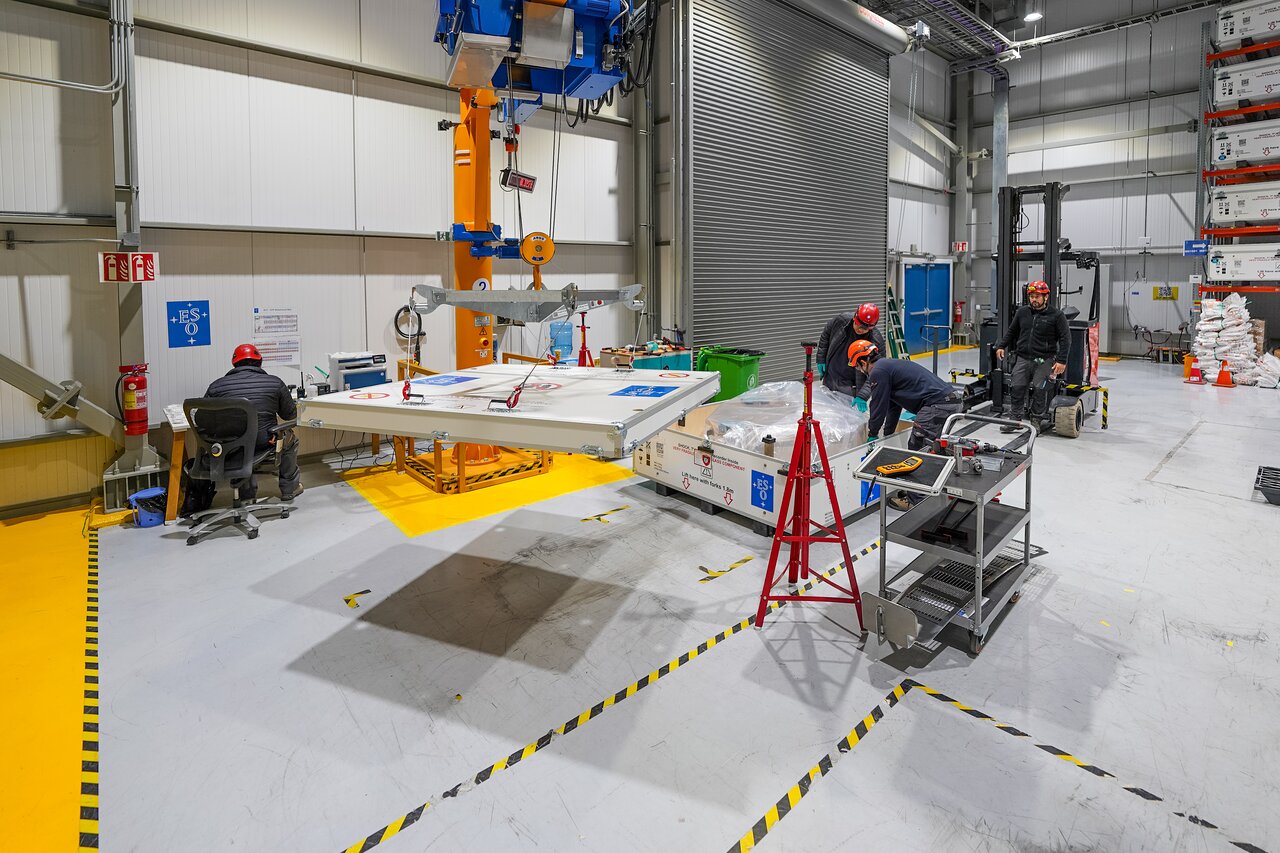
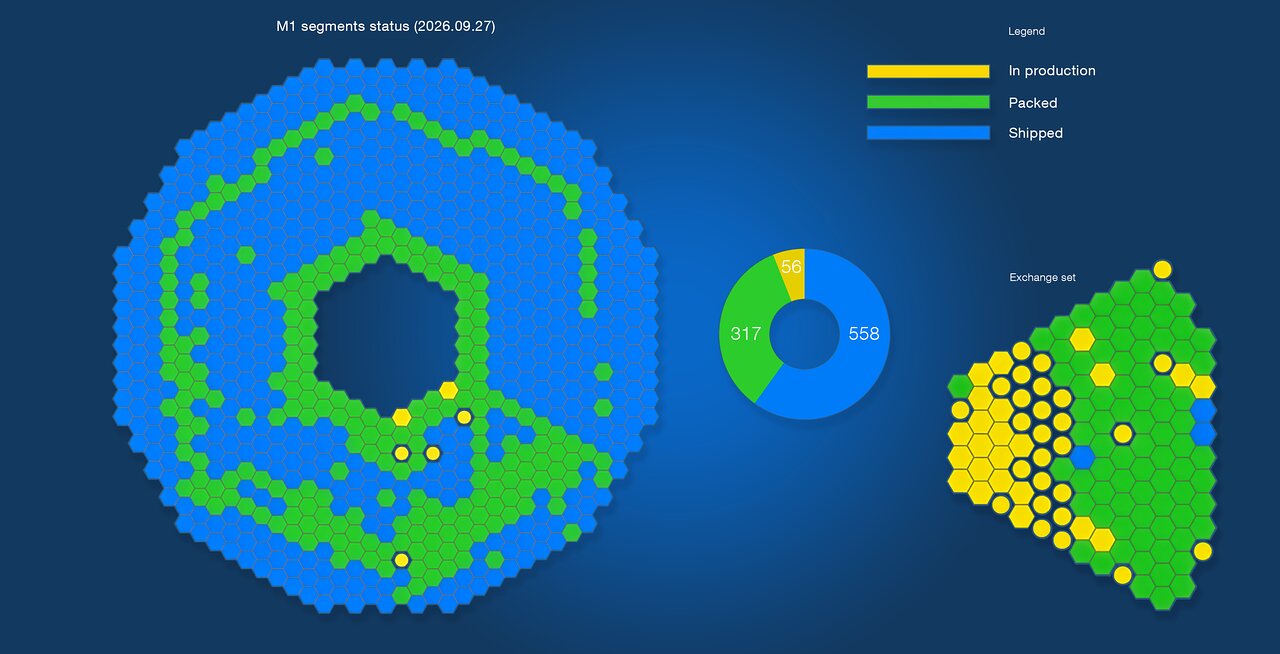
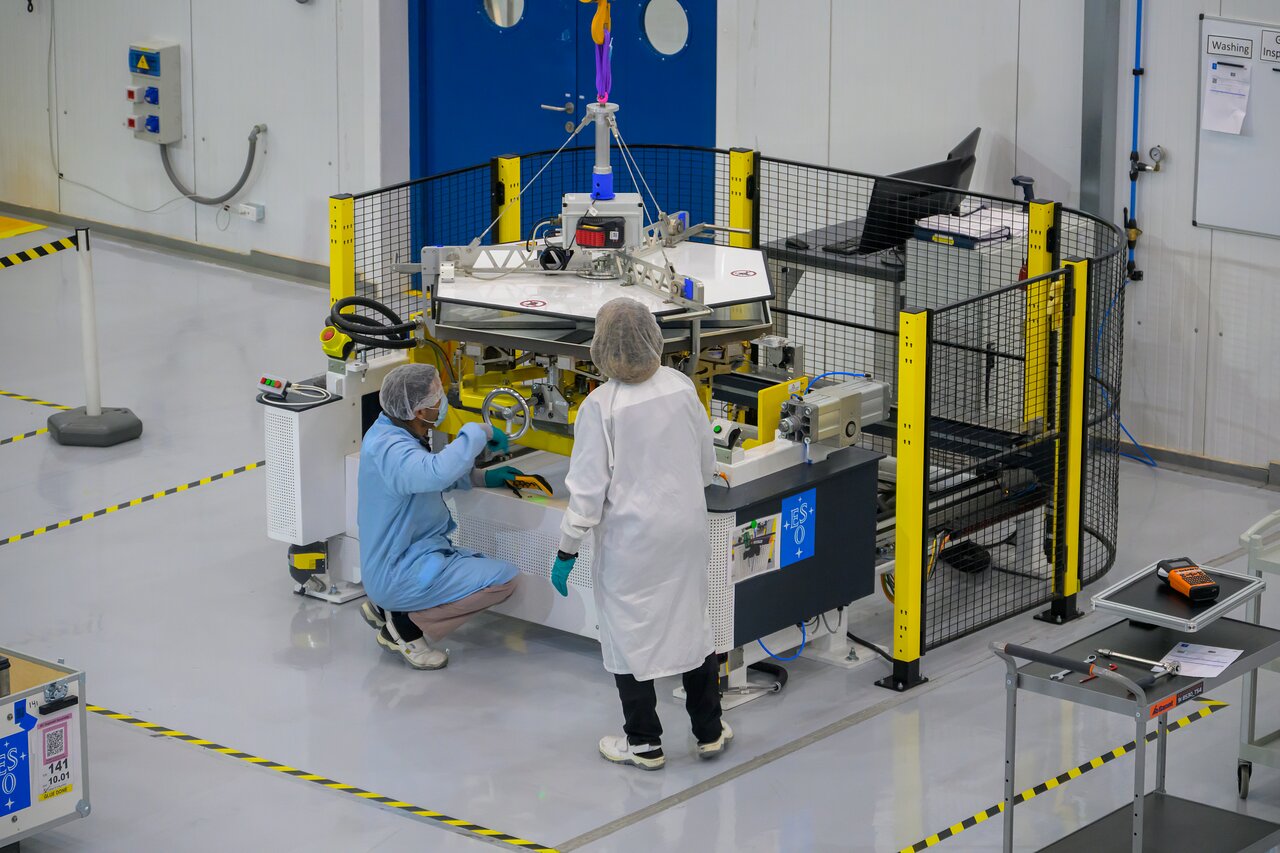
Bei ihrer Ankunft im ELT-Technikzentrum werden die Segmente von ESO-Ingenieuren und -Technikern geprüft und beschichtet, wodurch sie die hochreflektierende Oberfläche erhalten, die das Sternenlicht einfängt. Die Beschichtung hält jedoch nicht ewig: Sobald das Teleskop in Betrieb ist, müssen täglich zwei Segmente ausgetauscht werden, um eine neue reflektierende Schicht aufzubringen – eine Arbeit, die das ESO-Team am Paranal während der gesamten Betriebsdauer des ELT durchführen wird. Um dies zu ermöglichen, ohne dass jemals eine Lücke im Spiegel entsteht, wurden 133 zusätzliche Segmente hergestellt (also insgesamt 931), sodass ein Segment zur Neubeschichtung entnommen und sofort ersetzt werden kann. Mit der Ankunft der jüngsten Lieferung befinden sich nun mehr als 50 % der 931 Segmente in Chile.
Die allerersten Segmente trafen Anfang 2024 in Chile ein, rund sieben Jahre nachdem die ersten Industrieverträge für ihre Herstellung unterzeichnet worden waren. Mittlerweile hat Safran Reosc jedoch eine Produktionsrate von einem Segment pro Tag erreicht. Während mehr als die Hälfte der Segmente mit ihren Halterungen inzwischen in Chile eingetroffen ist, befinden sich die meisten anderen Segmente entweder auf dem Transportweg oder sind verpackt und versandbereit, während sich die restlichen wenigen noch in der Produktion befinden. Das bedeutet, dass in den kommenden Monaten alle M1-Segmente in Chile sein werden.
Wenn das ELT in einigen Jahren vom Cerro Armazones in der Nähe von Paranal aus mit der Beobachtung des Universums beginnt, wird es das weltweit größte „Auge am Himmel“ sein. Sein riesiger Spiegel, seine hochentwickelten Systeme und der dunkle Nachthimmel, unter dem es betrieben wird, werden es ihm ermöglichen, die Atmosphären von Gesteinsplaneten um andere Sterne zu untersuchen, die ersten Galaxien und Sterne zu beobachten, die sich nach dem Urknall gebildet haben, und zu prüfen, ob sich die physikalischen Konstanten im Laufe der kosmischen Zeit verändert haben. Das ELT-Projekt ist mittlerweile zu mehr als 75 % abgeschlossen, und die ersten Beobachtungen mit wissenschaftlichen Instrumenten sind für Ende 2030 geplant.
Kontaktinformationen
Bárbara Ferreira
ESO Media Manager
Garching bei München, Germany
Tel: +49 89 3200 6670
Email: press@eso.org
Über die Mitteilung
| ID: | ann26009 |
Bilder




Our use of Cookies
We use cookies that are essential for accessing our websites and using our services. We also use cookies to analyse, measure and improve our websites’ performance, to enable content sharing via social media and to display media content hosted on third-party platforms.
ESO Cookies Policy
The European Organisation for Astronomical Research in the Southern Hemisphere (ESO) is the pre-eminent intergovernmental science and technology organisation in astronomy. It carries out an ambitious programme focused on the design, construction and operation of powerful ground-based observing facilities for astronomy.
This Cookies Policy is intended to provide clarity by outlining the cookies used on the ESO public websites, their functions, the options you have for controlling them, and the ways you can contact us for additional details.
What are cookies?
Cookies are small pieces of data stored on your device by websites you visit. They serve various purposes, such as remembering login credentials and preferences and enhance your browsing experience.
Categories of cookies we use
Essential cookies (always active): These cookies are strictly necessary for the proper functioning of our website. Without these cookies, the website cannot operate correctly, and certain services, such as logging in or accessing secure areas, may not be available; because they are essential for the website’s operation, they cannot be disabled.
Functional Cookies: These cookies enhance your browsing experience by enabling additional features and personalization, such as remembering your preferences and settings. While not strictly necessary for the website to function, they improve usability and convenience; these cookies are only placed if you provide your consent.
Analytics cookies: These cookies collect information about how visitors interact with our website, such as which pages are visited most often and how users navigate the site. This data helps us improve website performance, optimize content, and enhance the user experience; these cookies are only placed if you provide your consent. We use the following analytics cookies.
Matomo Cookies:
This website uses Matomo (formerly Piwik), an open source software which enables the statistical analysis of website visits. Matomo uses cookies (text files) which are saved on your computer and which allow us to analyze how you use our website. The website user information generated by the cookies will only be saved on the servers of our IT Department. We use this information to analyze www.eso.org visits and to prepare reports on website activities. These data will not be disclosed to third parties.
On behalf of ESO, Matomo will use this information for the purpose of evaluating your use of the website, compiling reports on website activity and providing other services relating to website activity and internet usage.
Matomo cookies settings:
Additional Third-party cookies on ESO websites: some of our pages display content from external providers, e.g. YouTube.
Such third-party services are outside of ESO control and may, at any time, change their terms of service, use of cookies, etc.
YouTube: Some videos on the ESO website are embedded from ESO’s official YouTube channel. We have enabled YouTube’s privacy-enhanced mode, meaning that no cookies are set unless the user actively clicks on the video to play it. Additionally, in this mode, YouTube does not store any personally identifiable cookie data for embedded video playbacks. For more details, please refer to YouTube’s embedding videos information page.
Cookies can also be classified based on the following elements.
Regarding the domain, there are:
- First-party cookies, set by the website you are currently visiting. They are stored by the same domain that you are browsing and are used to enhance your experience on that site;
- Third-party cookies, set by a domain other than the one you are currently visiting.
As for their duration, cookies can be:
- Browser-session cookies, which are deleted when the user closes the browser;
- Stored cookies, which stay on the user's device for a predetermined period of time.
How to manage cookies
Cookie settings: You can modify your cookie choices for the ESO webpages at any time by clicking on the link Cookie settings at the bottom of any page.
In your browser: If you wish to delete cookies or instruct your browser to delete or block cookies by default, please visit the help pages of your browser:
Please be aware that if you delete or decline cookies, certain functionalities of our website may be not be available and your browsing experience may be affected.
You can set most browsers to prevent any cookies being placed on your device, but you may then have to manually adjust some preferences every time you visit a site/page. And some services and functionalities may not work properly at all (e.g. profile logging-in, shop check out).
Updates to the ESO Cookies Policy
The ESO Cookies Policy may be subject to future updates, which will be made available on this page.
Additional information
For any queries related to cookies, please contact: pdprATesoDOTorg.
As ESO public webpages are managed by our Department of Communication, your questions will be dealt with the support of the said Department.