European ARC Newsletter
29 May 2025

Welcome to the European ALMA Regional Centre Newsletter!  

This monthly newsletter is a compilation of recent European ALMA Regional Centre news and announcements, showcasing an exciting ALMA science result by European colleagues. Every month, you can learn an interesting ALMA fact in "Did you know" and give your opinion about a particular ALMA matter in the "Poll of the month".


News and announcements Science highlight Poll of the month Did you know


European ARC News and Announcements


Kick-off for a new study on SIS development for Band 9

19 May 2026:

In preparation for the Wideband Sensitivity Upgrade (WSU) programme, a team lead by Faouzi Boussaha from the Instrumental Research and Development group at LUX – Paris Observatory (France) has started a new ALMA development study to contribute to the development of the next generation of SIS (Superconductor–Insulator–Superconductor) detectors for ALMA's Band 9. The goal of the study is to double the instantaneous IF bandwidth and significantly increase the sensitivity, requiring a new generation of ultra-sensitive detector elements known as SIS junctions. Specifically, the study plans to use the Aluminium Oxide technology but will investigate new substrates such as silicon on insulator.

Read more


Record proposals submitted for ALMA Cycle 13!

07 May 2026:

The ALMA Cycle 13 Call for Proposals, which closed 23 April, received a record number of proposals and requested time. 1843 proposals were submitted, requesting a total of over 37,000 hours of 12m time. ALMA also received a record number of Large Proposals (48) and Joint Programmes (91), demonstrating the sustained growth in demand for ALMA observing time over the past 15 years.

Read more


Science Highlight

ALMA [CII] observations reveal how dozens of galaxies rapidly merge in the early Universe

ALMA [CII] image of the protocluster SPT2349-56
ALMA imaging of [CII] line emission from the protocluster SPT2349-56. Star symbols mark the centres of galaxies, while orange contours highlight the tidal arms around the inner region. These tidally ejected, galaxy-scale gas clumps are found to be ten times brighter than expected. The size of the Milky Way disk is shown at the same scale. Image Credit: N. Sulzenauer, MPIfR.

The existence of massive, elliptical galaxies in the early Universe has puzzled astronomers for two decades. A new study used ALMA data to shed light on this open question of galaxy formation. The team discovered enormous, shock-heated tidal debris around a protocluster at z=4.3, which might represent a hallmark phase of massive galaxy and galaxy cluster assembly in the early Universe.

ALMA [CII] line observations reveal evidence of '[CII] streamers', tidal interactions between galaxies and possible shock-heating of the gas. Like 'beads on a string', the [CII] streamers fragment into a few kpc-spaced and turbulent clumps that have a similar column density as spiral arms in the local Universe. Analysis in phase space indicates that about half of the galaxies in the protocluster core populate the same caustic as the [CII] streamers, suggesting a role of angular momentum dissipation via tidal ejection during the formation of the bright central galaxy of this cluster. 

Duncan MacIntyre and Joel Tsuchitori, two undergraduate students on the team, ran detailed numerical simulations to bridge the observations of this protocluster collapse with previous studies of mature galaxy clusters. The striking match between the different types of objects found at different cosmic times might not only demonstrate the importance of simultaneous major mergers during massive galaxy formation. It may also help to explain how heavy elements (such as carbon) are heated and transported throughout the first galaxy clusters. 

You can read the paper here.

Contributed by Nikolaus Sulzenauer


ALMA poll of the month

                                
This poll is completely anonymous!    
How was your experience with the web-based OT?

Always

Sometimes

Never, I use only delivered image products

I didn't know I could re-image data

If you would like help re-imaging your data, please contact your local ARC Node.

Results from last month's poll, "How was your experience with the new web-based OT?"
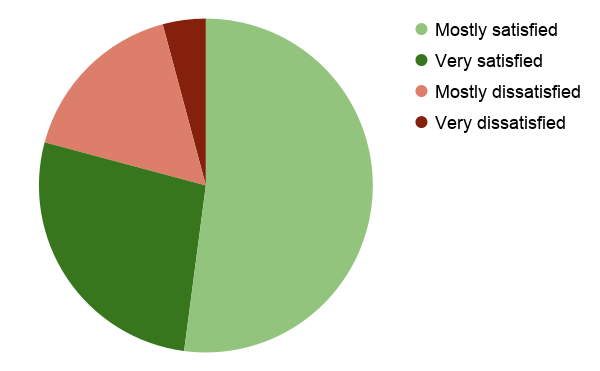
Pie chart for responses to the question, How was your experience with the new web-based OT?

If you have any suggestions or complaints about the web-based OT, please make a Helpdesk ticket


Did you know?

The Technical Handbook gives detailed instructions on how to combine multi-configuration datasets (Section 7.9 'Multi-array and Multi-configuration Imaging')? The 12m array and ACA data can be imaged together using the task tclean in CASA. TP or single dish observations can be combined with interferometric data via 'feathering' (using feather) or by converting to visibilties (using tp2vis). If you need help with data combination, please contact your local ARC Node for assistance.


If you would like to contribute an ALMA science highlight, please contact the newsletter editor at Hannah.Stacey@eso.org.