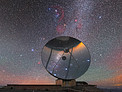
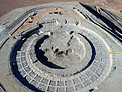
The SPECULOOS project has made its first observations at the European Southern Observatory’s Paranal Observatory in northern Chile. SPECULOOS will focus on detecting Earth-sized planets orbiting nearby ultra-cool stars and brown dwarfs.
Le communiqué, les images et les vidéos sont disponibles sur :
https://www.eso.org/public/news/eso1839/
Amicalement,
Le service Education et Diffusion de la Culture Scientifique de l'ESO
5 décembre 2018
|
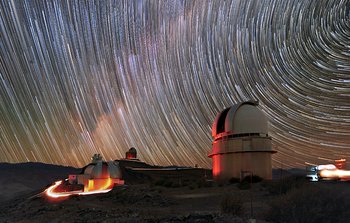
4 décembre 2018: To coincide with the 2019 Total Solar Eclipse, eight social media users have been hand-picked from the pool of users that have signed up for the competition to attend ESO ...
|
| Lire plus |
|
3 décembre 2018: Our January–March 2019 programme for the ESO Supernova Planetarium & Visitor Centre is now available online, and the exciting lineup of activities and shows for this period can be ...
|
| Lire plus |
|
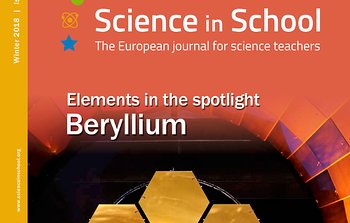
30 novembre 2018: The latest issue of the free magazine Science in School is now available online and in printed form. This European journal for science teachers offers up-to-date information on cutting-edge science ...
|
| Lire plus |
|
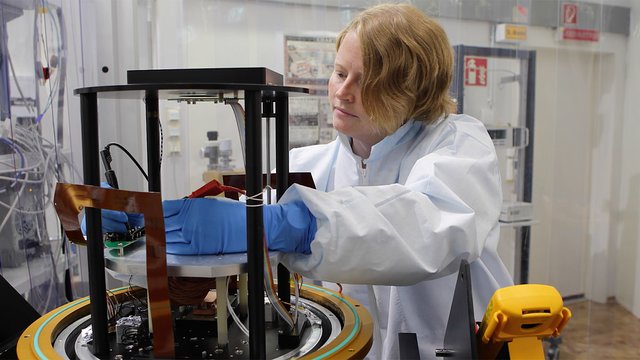
22 novembre 2018: ESO designs, builds and operates some of the most advanced telescopes and instruments in the world. To achieve this, the organisation employs a host of talented engineers who design, develop ...
|
| Lire plus |
|
Interview with: Pierre Vernazza
and Franck Marchis
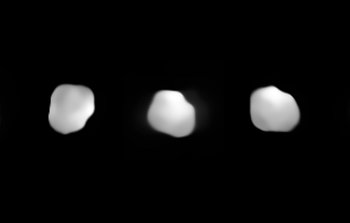
30 novembre 2018: A team of scientists are currently using ESO’s Very Large Telescope to survey the largest asteroids in the Solar System. Nicknamed HARISSA, the survey has recently gathered lots of information ...
|
| Lire plus |
|
Interview with: Vardan Adibekyan
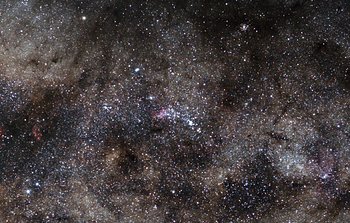
23 novembre 2018: It is believed that the Sun has a few thousand solar siblings, any of which could host living organisms similar to those found on Earth. A team of scientists recently ...
|
| Lire plus |
|
|
|
|