When Betelgeuse, a bright orange star in the constellation of Orion, became visibly darker in late 2019 and early 2020, the astronomy community was puzzled. A team of astronomers have now published new images of the star’s surface, taken using the European Southern Observatory’s Very Large Telescope (ESO’s VLT), that clearly show how its brightness changed. The new research reveals that the star was partially concealed by a cloud of dust, a discovery that solves the mystery of the “Great Dimming” of Betelgeuse.
Die Mitteilung, Bilder und Videos sind erhältlich unter:
https://www.eso.org/public/news/eso2109/
Mit freundlichen Grüßen,
The ESO Department of Communication
16. Juni 2021

|
11. Juni 2021: Nach einer Unterbrechung aufgrund der COVID-19-Pandemie, die Mitte 2020 die Schließung der Baustelle erzwang, laufen die Vorbereitungen für die Wiederaufnahme der Bauarbeiten am Extremely Large Teleskop (ELT) der ESO am ...
|
| Weiter |

|
1. Juni 2021: Die ESO hat heute eine Vereinbarung mit einem internationalen Konsortium zum Bau und Betrieb von MAVIS unterzeichnet. MAVIS ist ein einzigartiges Instrument, das am Very Large Telescope (VLT) der ESO ...
|
| Weiter |
|
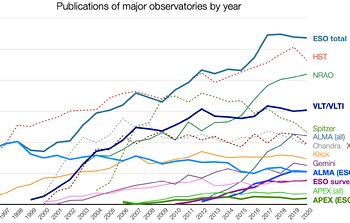
20. Mai 2021: Die ESO-Observatorien mussten im Jahr 2020 wegen der COVID-19-Pandemie unter schwierigen Bedingungen arbeiten und die Beobachtungen für ein paar Monate reduzieren oder teils ganz aussetzen. Trotzdem war 2020 ein sehr ...
|
| Weiter |
|
Thea Elvin
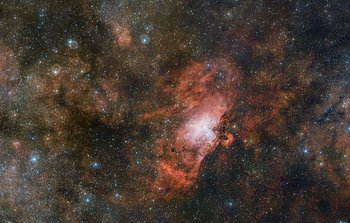
4. Juni 2021: Next week, the VLT Survey Telescope (VST), located at ESO’s Paranal Observatory in the Chilean Atacama Desert, celebrates its tenth birthday. The anniversary marks ten years since the telescope’s “first ...
|
| Weiter |
|
Juan Carlos Muñoz Mateos
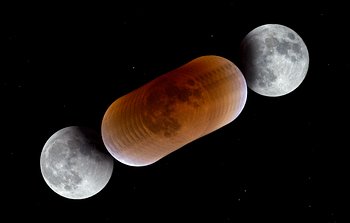
21. Mai 2021: Astronomers have discovered thousands of exoplanets –– planets orbiting stars other than the Sun. When looking for the chemical fingerprints that life might have left in the atmospheres of these ...
|
| Weiter |
|
|
|
|