La Nébuleuse de la Carène, l’une des nébuleuses les plus étendues et les plus brillantes du ciel nocturne, a été magnifiquement capturée par le télescope VISTA de l’ESO installé à l’Observatoire de Paranal au Chili. En l’observant dans le domaine infrarouge, VISTA s’est affranchi du gaz chaud et de la poussière sombre situés en périphérie de la nébuleuse et a révélé la présence de myriades d’étoiles, nouvellement nées pour certaines, sur le point de mourir pour d’autres.
Le communiqué, les images et les vidéos sont disponibles sur :
https://www.eso.org/public/france/news/eso1828/
Amicalement,
Le service Education et Diffusion de la Culture Scientifique de l'ESO
29 août 2018

|
10 août 2018: A recent update to the ESO Science Archive has made accessing ESO’s vast collection of astronomical data more intuitive and easier than ever before. The highlight of this update ...
|
| Lire plus |
|
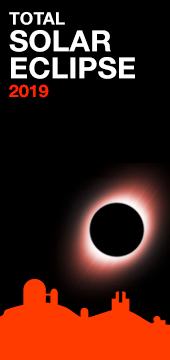
10 août 2018: On 2 July 2019, the Moon will cover the face of the Sun, turning day to night in a total solar eclipse covering a 100 km-wide swathe of northern Chile ...
|
| Lire plus |

|
Interview with: Jean Louis Lizon
24 août 2018: Over the last six decades, ESO has risen to its prominence in ground-based astronomy mainly due to its smart, dedicated, and hard-working staff. One such staff member is Jean Louis ...
|
| Lire plus |

|
Interview with Joel Sanchez-Bermudez
17 août 2018: A telescope alone is not enough to do advanced astronomical research — the light they capture must be analysed by an instrument. There is a huge range of instruments and ...
|
| Lire plus |

|
Interview with: Reinhard Genzel
10 août 2018: Reinhard Genzel’s team at the Max Planck Institute for Extraterrestrial Physics (MPE) recently found general relativistic effects during the closest approach of the star S2 to the Sagittarius A*, a ...
|
| Lire plus |
|
|
|
|