Observations made with the Atacama Large Millimeter/submillimeter Array (ALMA) and ESA’s Rosetta mission, have revealed the presence of the organohalogen Freon-40 in gas around both an infant star and a comet. Organohalogens are formed by organic processes on Earth, but this is the first ever detection of them in interstellar space. This discovery suggests that organohalogens may not be as good markers of life as had been hoped, but that they may be significant components of the material from which planets form. This result, which appears in the journal Nature Astronomy, underscores the challenge of finding molecules that could indicate the presence of life beyond Earth.
Julkaisu, kuvat ja videot ovat saatavilla täällä:
http://www.eso.org/public/news/eso1732/
Parhain terveisin,
ESO:n koulutus- ja viestintäosasto
2. lokakuuta 2017
|
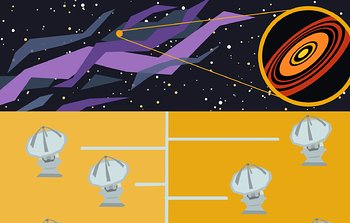
2. lokakuuta 2017: Surely bigger is better when it comes to telescopes to observe the vast Universe? Well, not always. ALMA is the largest ground-based facility for observing radio waves, but it is ...
|
| Lue lisää |
|
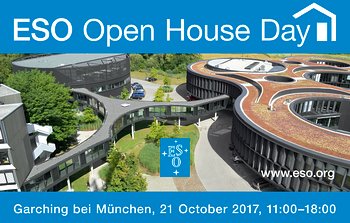
28. syyskuuta 2017: On Saturday 21 October 2017 the European Southern Observatory (ESO) will open its doors to the public between 11:00 and 18:00 CEST at its headquarters in Garching bei ...
|
| Lue lisää |
|
Interview with: Guillem Anglada-Escudé
29. syyskuuta 2017: In January 2016, a pioneering outreach research campaign called Pale Red Dot was launched. It not only aimed to search for Earth-like exoplanets around Proxima Centauri, the closest star to ...
|
| Lue lisää |
|
|
|
|