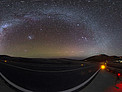
Observations from ESO’s Very Large Telescope (VLT) have, for the first time, determined the rotation rate of an exoplanet. Beta Pictoris b has been found to have a day that lasts only eight hours. This is much quicker than any planet in the Solar System — its equator is moving at almost 100 000 kilometres per hour. This new result extends the relation between mass and rotation seen in the Solar System to exoplanets. Similar techniques will allow astronomers to map exoplanets in detail in the future with the European Extremely Large Telescope (E-ELT).
Pressemeddelelsen, billederne og videoerne er tilgængelige på:
http://www.eso.org/public/news/eso1414/
Oversættelser er tilgængelige på andre landes ESO-sider: Österreich, België—Belgique—Belgien, Brasil, Chile, Česko, Suomi, France, Deutschland, Ísland, Italia, Nederland, Norge, Polska, Portugal, Россия, España, Sverige, Suisse—Schweiz—Svizzera, Türkiye, Srbija
Space Scoop - pressemeddelelsen i børnevenlig udgave http://www.eso.org/public/news/eso1414/kids/
Med venlig hilsen,
ESOs uddannelse- og formidlingsafdeling
30. april 2014
|
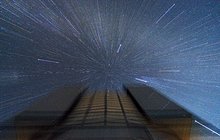
28. april 2014: To enhance their programmes of scientific cooperation with the host country, ESO provides and manages an annual fund for the development of astronomy and technology related disciplines in Chile. The ...
|
| Læs mere |

|
25. april 2014: The latest issue of the free magazine Science in School is now available online and in print. This European journal for science teachers offers inspiring articles, fun games and hands-on ...
|
| Læs mere |
|
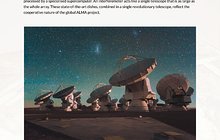
16. april 2014: Thanks to a new app developed in partnership with the Polish company Bridge, the Atacama Large Millimeter/submillimeter Array (ALMA) will appear in 3D before your eyes by using your ...
|
| Læs mere |